Build a community that
grows your brand for you
with community-led marketing
Community-led marketing recognizes that growth no longer follows a linear funnel. While core elements of marketing, like creating strong content and driving conversions, still matter, they’re no longer the whole picture. Community-led marketing evolves this approach for today’s reality.
The community flywheel is an actionable framework designed to help you create relevance and connection that actually sticks. Instead of chasing clicks or optimizing for the algorithm, it focuses on building experiences people genuinely want to be part of.

What is community-led marketing?

How does community-led marketing work?

Get started with community-led marketing
Loved by brands globally






What is community-led marketing?
Community-led marketing (CLM) is a marketing strategy that grows your brand by creating spaces where people feel seen, valued, and connected. Instead of pushing content for clicks or conversions, it builds belonging, encourages participation, and turns members into advocates.
Instead of asking, “What should we post?” you start asking:
- Who are we bringing together?
- How can they participate?
- What would make them want to share this with others?
CLM makes it easy for:
Social media managers to . . .
How does community-led marketing work?
1. Invite

Strong invitations should feel human and be specific. They are intended to give people something to react to, not just something to consume.
You’ll often see this show up as:
- A question that invites perspective
- A shared frustration or relatable moment
- A behind-the-scenes decision
- A point of view that reflects your audience’s experience
2. Participate
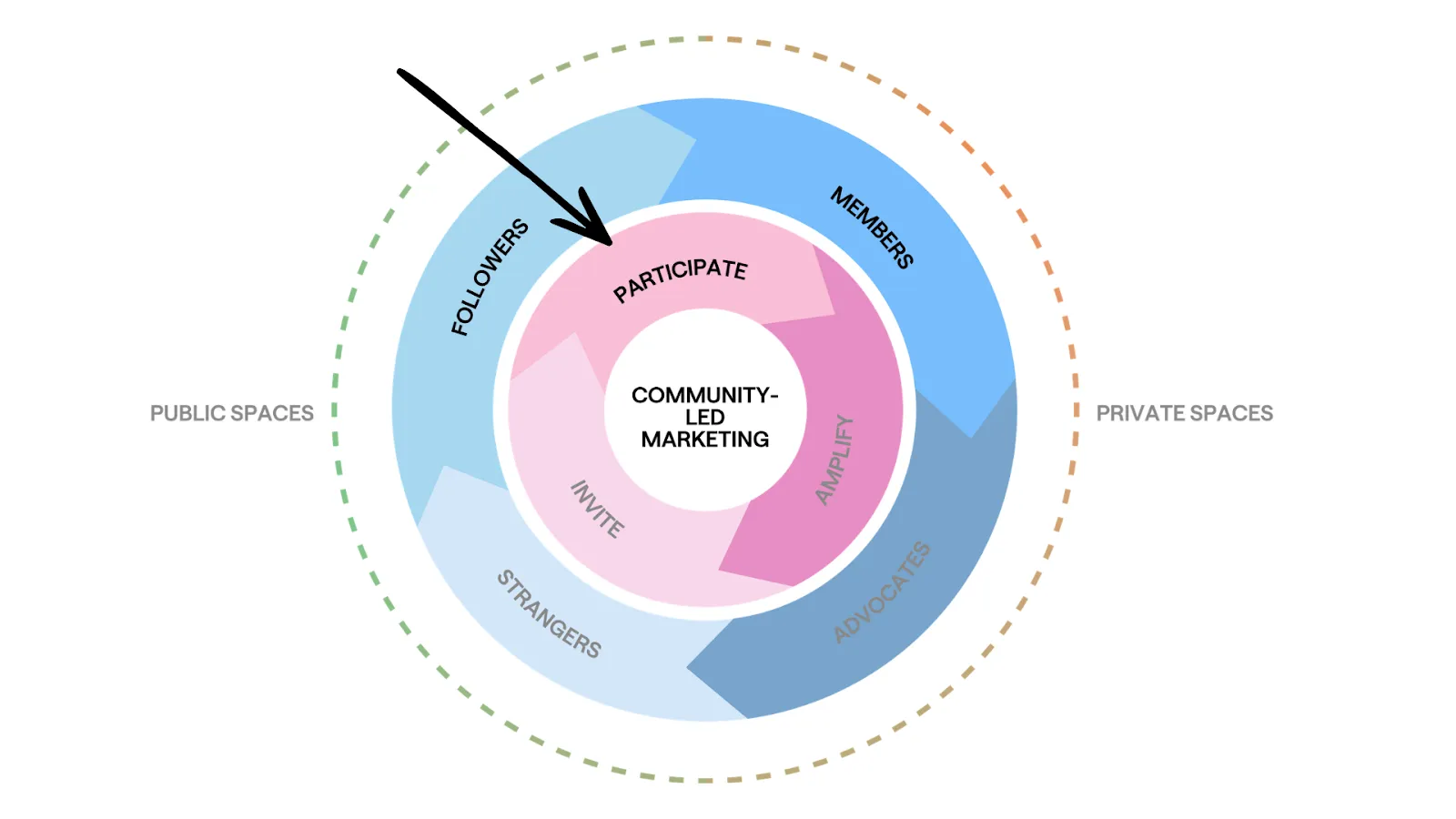
Participation can look like sharing opinions, helping others, or co-creating content with your brand.
Your role shifts from posting content to hosting a space. You guide conversations, highlight contributions, and shape the culture of your community.
That’s where trust (and familiarity) starts to grow.
3. Amplify
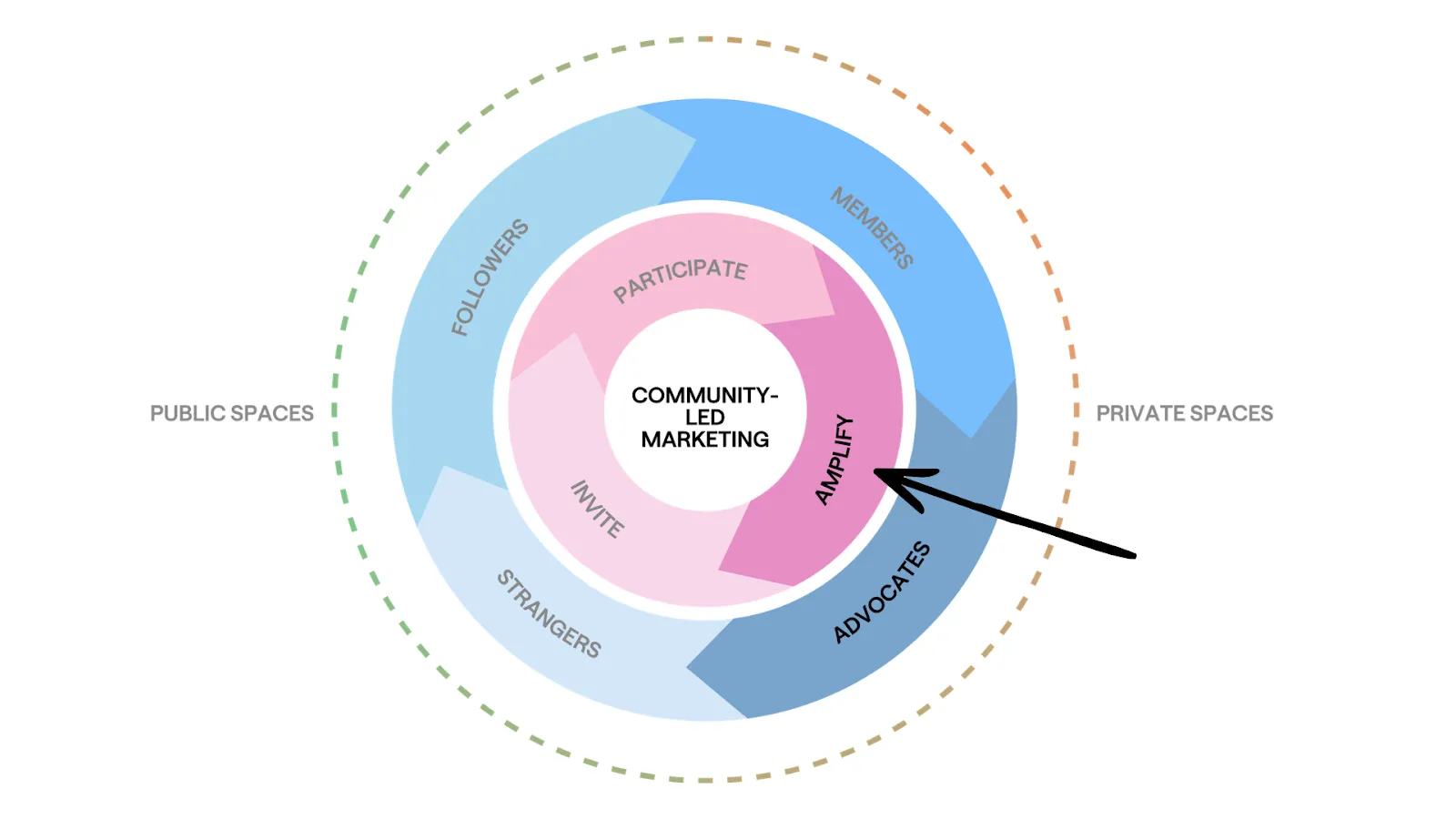
Amplification happens when people share your brand because they want to – not because you asked.
It might look like:
- Recommending your brand to others
- Sharing your content organically
- Creating content about your brand
- Talking about your community experience
And every share becomes a new invitation for someone else to join.
What is the community flywheel?
At the centre of it all is belonging. Because when people feel like they truly belong, they don’t just scroll past your content – they jump in, join the conversation, and become part of what you’re building.
Loved by real people building real communties

"Community-led marketing creates spaces people actually want to join. As other channels get noisier and more full of slop, thoughtfully built communities can cut through that noise by fostering genuine relationships. There is immense value in connecting folks to each other through your brand rather than just pushing content to an audience."
Annie Warner
Head of Community at Lenny's Newsletter
Get started with community-led marketing
Subscribe to the community-led marketing newsletter

Learn community-led marketing
Frequently asked questions
Can community-led marketing work for small businesses?
Yes. In fact, smaller brands often have an advantage because they can build closer, more personal relationships with their community.
Do you need to run paid ads with CLM?
No, paid ads aren’t required for CLM, but they work best when used together. CLM builds trust and demand organically, while paid ads amplify reach and accelerate results through retargeting engaged audiences, boosting high-performing community content, and staying top of mind during decision-making
How do you prove the value of CLM?
By tracking leading and lagging indicators. Leading indicators: engagement, community growth, brand mentions. Lagging indicators: revenue impact, retention, and customer acquisition. Together, they show both early traction and business results.
How is community-led marketing different from inbound marketing?
Inbound focuses on attracting and converting leads. Community-led marketing focuses on belonging, participation, and long-term relationships that naturally lead to growth.
What are examples of community-led marketing?
Examples include co-creating content with your community, responding to feedback publicly, hosting discussions, and highlighting community members.
What's the difference between community-led growth and community-led marketing?
Community-led marketing (CLM) is different from community-led growth (CLG) because CLM focuses specifically on how marketing teams use community to grow brand awareness, engagement, and advocacy through channels like social media, newsletters, events, creators, and online groups. CLG is the broader business strategy focused on how community supports overall company growth through customer retention, referrals, product adoption, and loyalty.