What is the community flywheel (and how to build one)
Learn how the community flywheel works and how to build one for your brand. Turn attention into participation and participation into long-term growth.
TL;DR:
- The community flywheel is a framework for turning attention into participation, and participation into advocacy.
- The strongest community flywheels also give each channel a clear role, create pathways between spaces, and use community behaviour to guide what you do next.
- The flywheel has three key stages:
- Invite: Give people a reason to lean in with relatable content, questions, and shared experiences.
- Participate: Turn engagement into meaningful interactions by responding, listening, and creating space for people to contribute.
- Amplify: Let your community carry the message forward through shares, recommendations, user-generated content, and word of mouth.
If you’re trying to grow your brand in a way that builds real, long-term connections, the community flywheel is one of the most useful frameworks to understand.
Most marketing strategies are built around reach – aka more impressions, more clicks, and more visibility. That approach can get attention yes, but attention is even harder than ever to gain since AI became accessible.
The community flywheel works differently. It builds momentum through relationships – turning attention into participation, and participation into advocacy.
And that’s what sits at the core of community-led marketing (CLM).
Community-led marketing is a marketing strategy that grows your brand by creating spaces where people feel seen, valued, and connected. Instead of pushing content for clicks or conversions, it builds belonging, encourages participation, and turns members into advocates.
Let’s take a closer look at how it works.
What is the community flywheel?
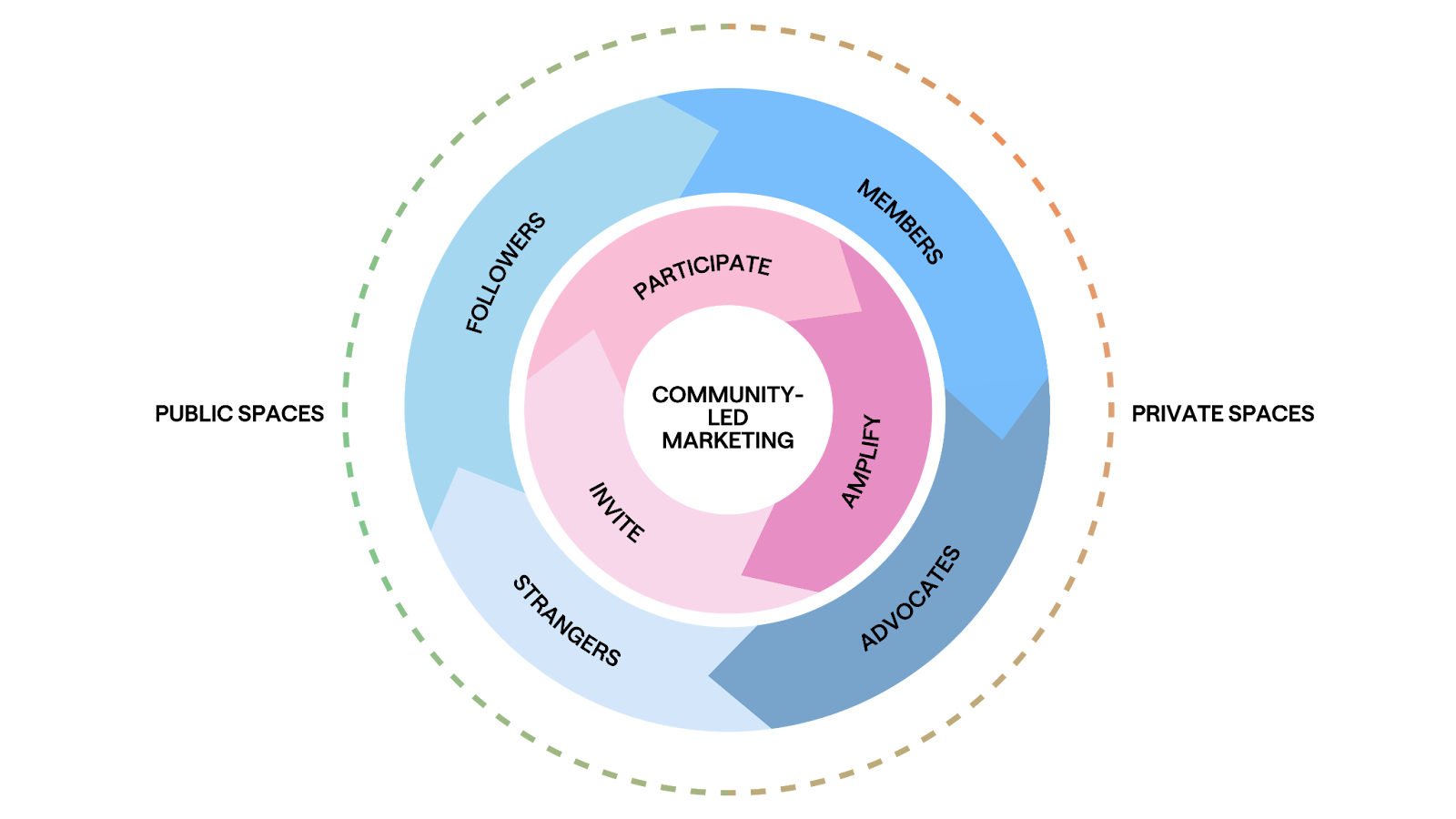
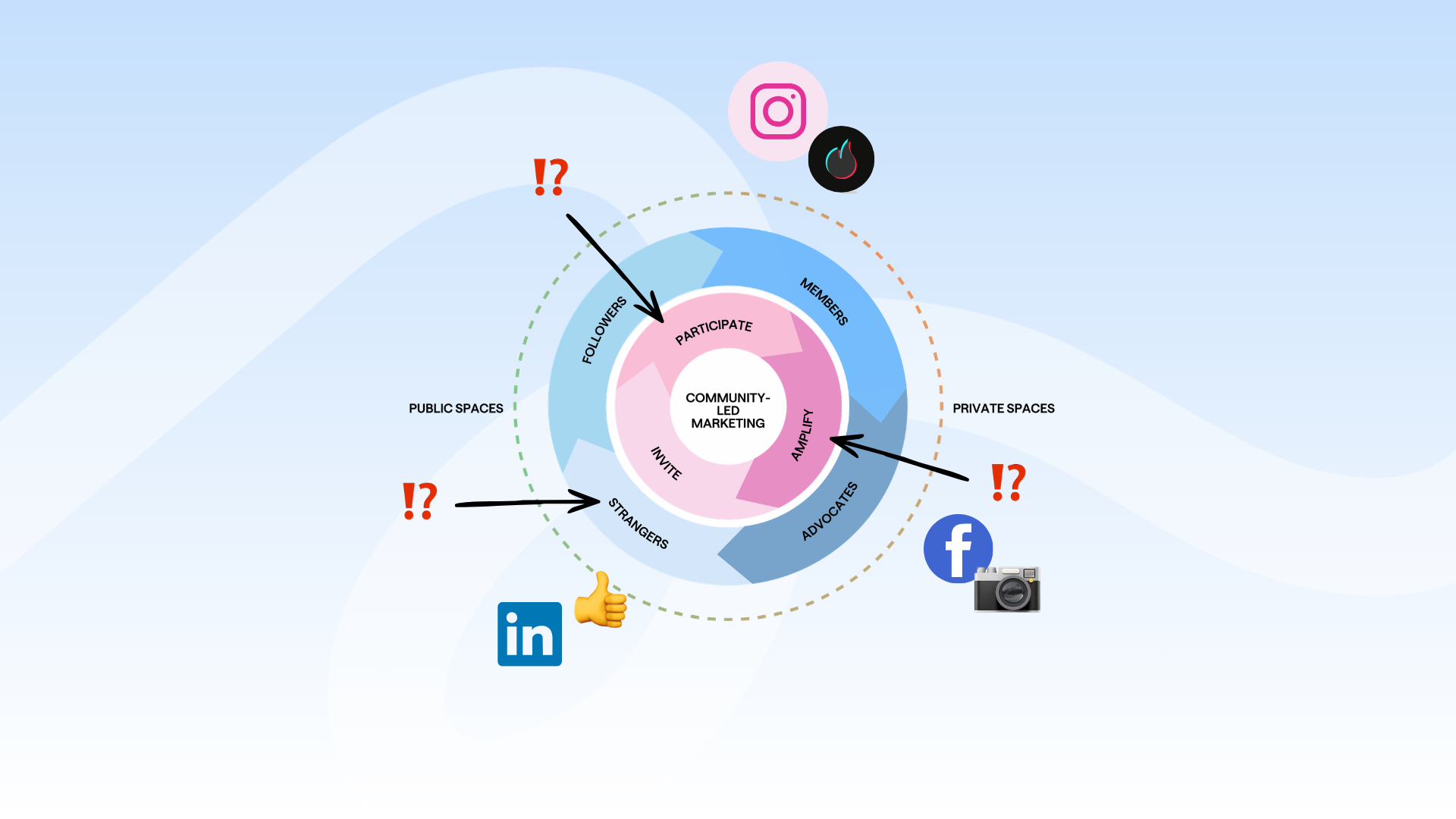
The community flywheel is built around three connected stages: Invite, Participate, and Amplify.
When they’re working together, growth compounds over time instead of resetting with every campaign.
At the centre of the flywheel is belonging. When people feel like they belong, they engage differently.
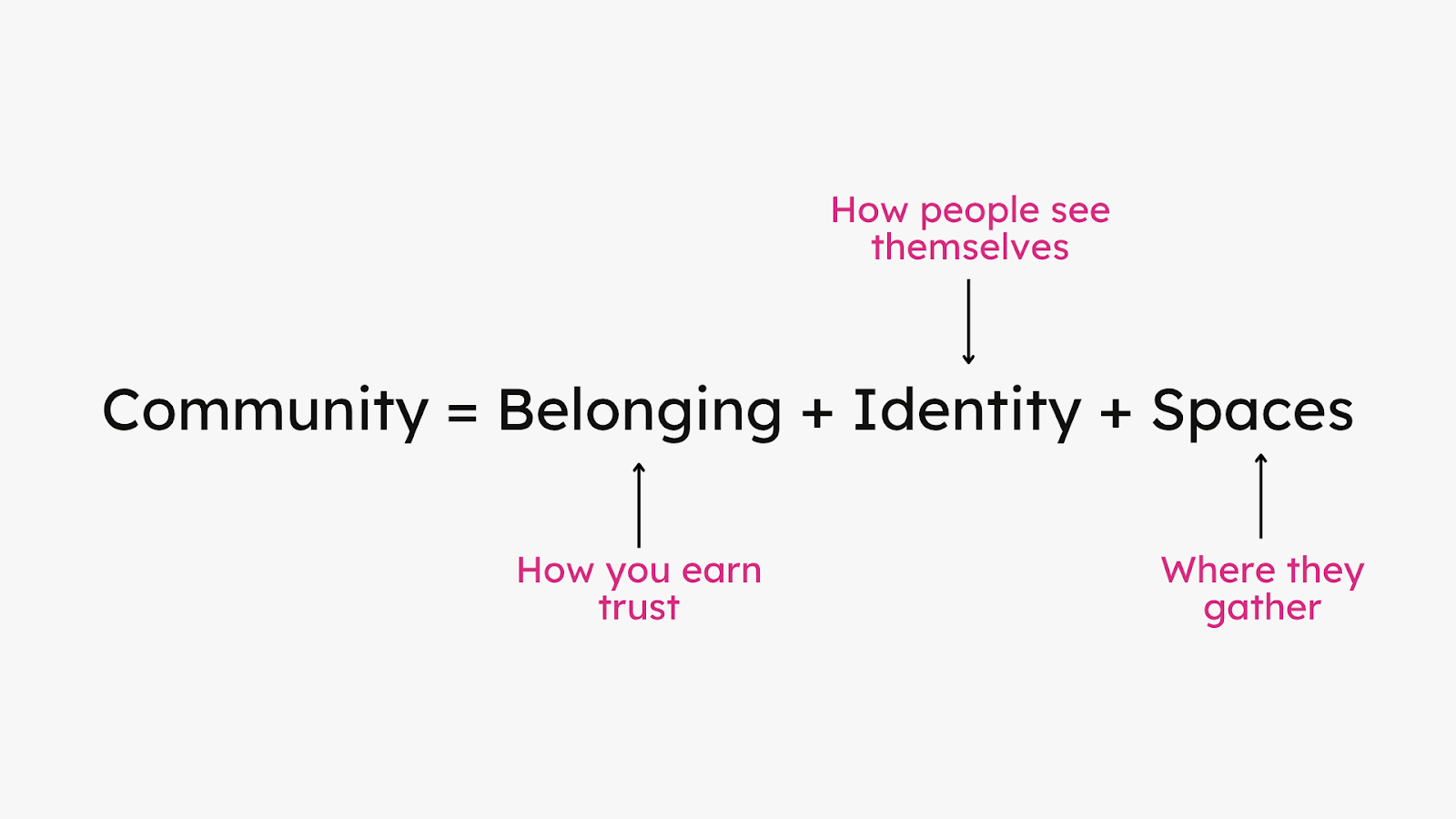
Around that, two other elements start to take shape:
- Identity: People begin to see themselves as part of your community
- Environment: The spaces where those interactions happen (social media, events, newsletters, etc.
One of the most common mistakes teams make is treating every platform the same way. In practice, each space plays a different role.
Some are better for discovery, others for conversation, and others for showcasing what the community has created.
When you design with that in mind, your content starts to feel more intentional, and your audience knows exactly where (and how) to engage.
Step 1: Invite
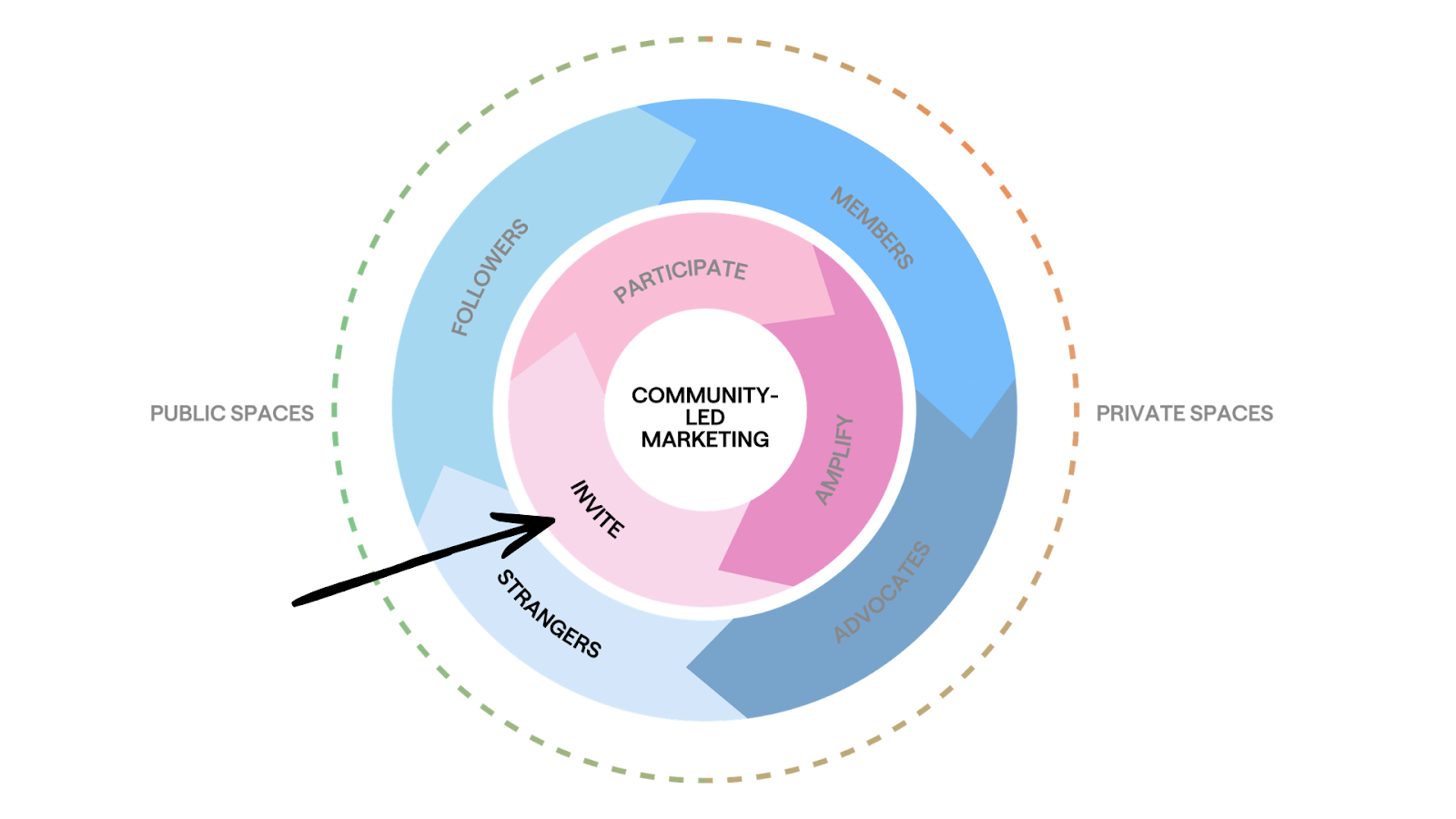
The flywheel starts with an invitation. This is the first moment of contact, when someone decides whether to keep scrolling or lean in.
Strong invitations should feel human and be specific. They are intended to give people something to react to, not just something to consume.
You’ll often see this show up as:
- A question that invites perspective
- A shared frustration or relatable moment
- A behind-the-scenes decision
- A point of view that reflects your audience’s experience
Example
A post that says, “Here’s our latest update,” doesn’t give people much to do.
A post that says, “We’re choosing between two ideas. What would you pick?” creates a moment of involvement.
Brands like Nike Run Club build this directly into their experience. They’re not leading with “buy this.” They’re inviting people into an identity – becoming a runner, tracking progress, showing up consistently.
And identity is what creates a connection that lasts.
Step 2: Participate
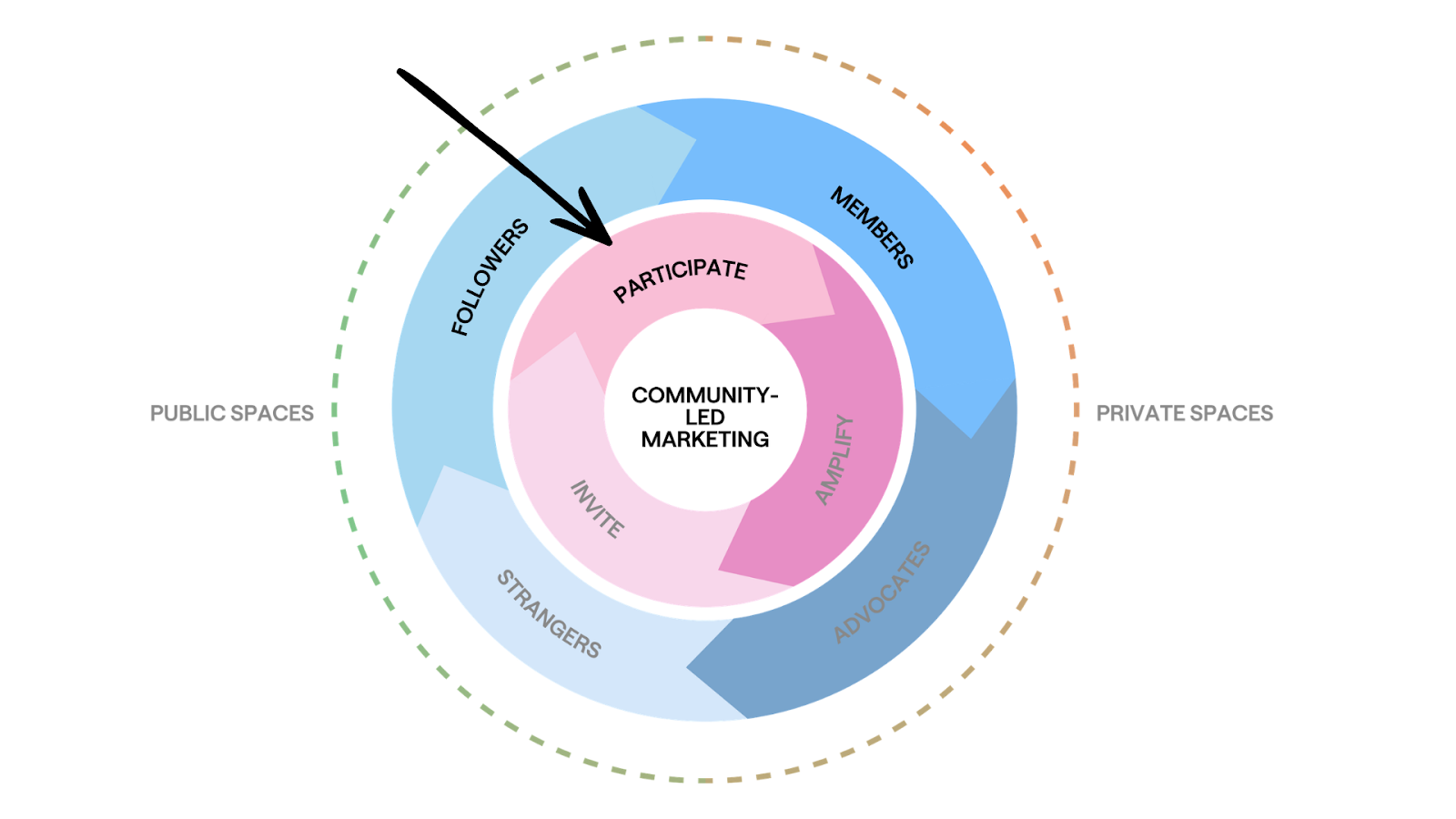
Once someone engages, the next question is: what happens after?
Participation is where the flywheel either gains momentum or stalls.
This is the stage where people:
- Respond
- Share their experiences
- Interact with each other
- Start to show up regularly
For brands, this requires a shift in mindset.
Your role changes as well. Instead of focusing only on publishing, you’re guiding conversations, acknowledging contributions, and reinforcing what kind of behaviour is encouraged in your community.
What strong participation looks like
In active communities, a few patterns tend to emerge:
- The same people show up repeatedly
- Conversations extend beyond a single comment
- Members start recognizing each other
- People reference past discussions
You can see this in spaces like Sephora Beauty Insider Community, where members build credibility over time through consistent contributions.
Participation creates insight
One of the biggest advantages of this stage is the quality of feedback.
Instead of guessing what your audience cares about, you start to see it directly:
- Which questions come up repeatedly
- What language do people naturally use
- Where confusion or frustration exists
Those signals can shape everything from your content strategy to product decisions.
Content plays a different role here
Content still matters, but its job changes.
Instead of delivering polished, final answers, it opens the door for conversation.
The best posts leave room for people to respond, add context, or share their own experience.
And what happens after you post matters just as much.
When you reply thoughtfully, continue the conversation, and recognize contributors, people feel like their input matters.
That feeling is what brings them back.
Step 3: Amplify
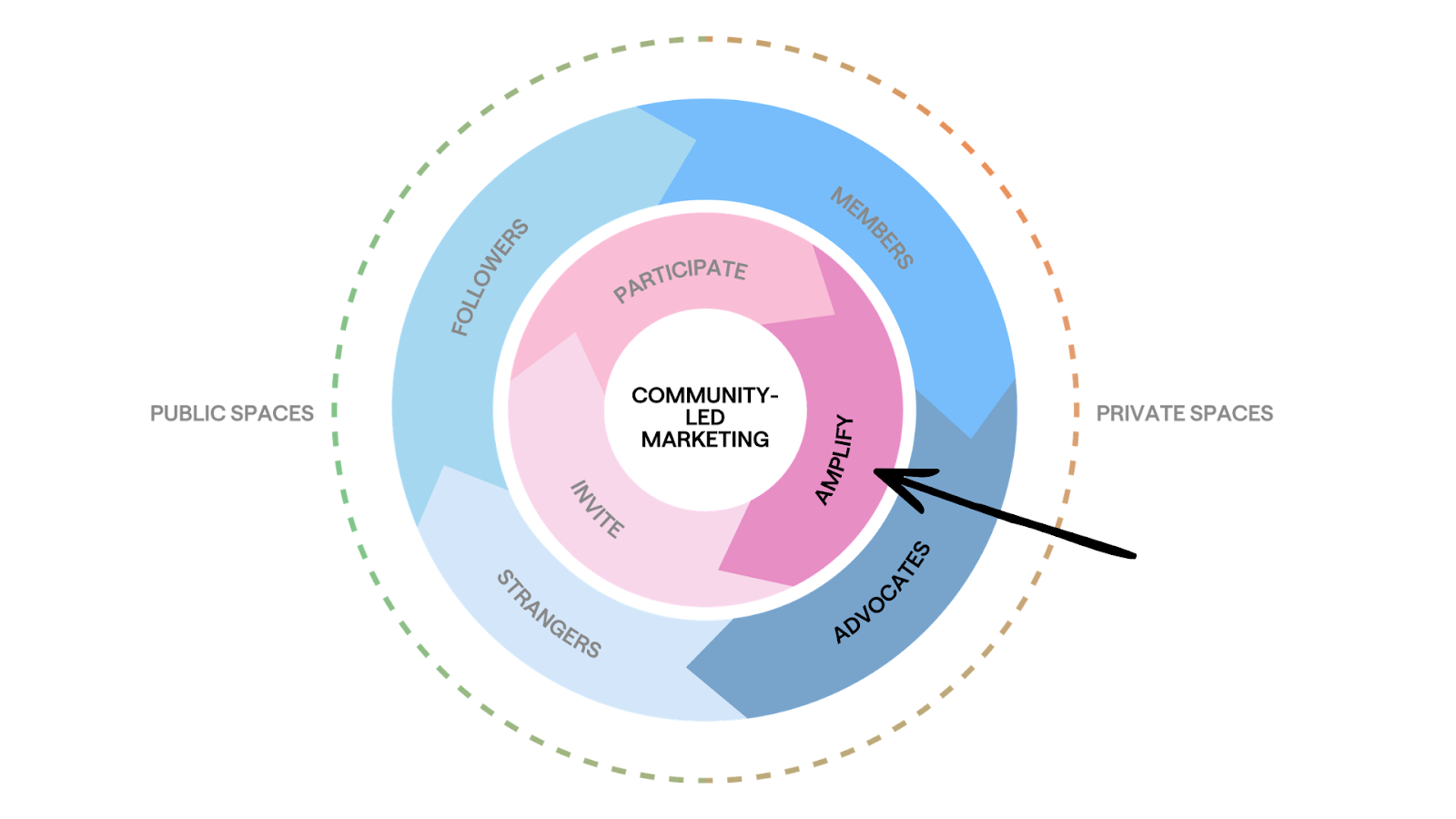
Amplification is the result of everything that came before it.
At this stage, people start sharing your brand on their own. They talk about your content, recommend your product, and bring others into the experience.
This doesn’t usually happen because of a single post. It’s built over time through consistent interaction.
What amplification looks like
- Someone shares your post with their network
- A customer recommends you in a comment thread
- Members create their own content related to your brand
- Conversations about your brand happen without your involvement
For example, when Dylan Bridger, Email Marketing Specialist, focused on engaging directly with customers during a launch, people began sharing their purchases and encouraging others to join in. That activity came from feeling involved, not from being prompted.
“Customers started proudly posting their own proof-of-purchase screenshots without me even asking. One person’s testimonial caused someone else to reply, saying it made him buy. Another customer told his audience to go buy before I raised the price. On deadline day, people I hadn’t even contacted started sharing the launch deadline with their own followers. The result was 88 orders in 72 hours with an 18% on-site conversion rate.” – Dylan Bridger
Why amplification matters
Every time someone shares your brand, it creates a new entry point for someone else.
That shared experience becomes the next invitation.
This is where the flywheel effect becomes visible. Growth no longer depends entirely on what you publish – it’s supported by what your community shares.
Step 4: Design your own community flywheel
The structure stays consistent, but how it shows up will depend on your audience and goals.
Define your invitation
Start by identifying what draws people in.
This could be a:
- Shared challenge
- Clear point of view
- Specific audience identity
The more specific this is, the easier it is for the right people to recognize themselves in it.
Create space for participation
Look at where interaction can happen and how easy it is to engage.
Consider:
- Are you asking questions people can actually answer?
- Are you responding in a way that continues the conversation?
- Do people see others being acknowledged?
Participation grows when people feel comfortable contributing and know their input won’t be ignored.
Support amplification
Pay attention to what people naturally share.
Instead of trying to force it, look for:
- Posts that generate strong responses
- Recurring contributors
- Moments people reference or reshare
These are signals that your community is starting to carry the message forward.
Map your spaces intentionally
Each space plays a different role.
For example:
- Social media often drives discovery
- Comments and DMs support conversation
- Events or communities deepen relationships
- User-generated content extends reach
When each space has a clear purpose, the overall experience feels more cohesive.
Iterate based on behaviour
Your community will show you what’s working.
Look for patterns using the three Ws:
- Who keeps coming back
- What topics create discussion
- Where conversations continue
These signals are more valuable than surface-level metrics because they reflect real engagement.
Why the community flywheel works
The community flywheel builds momentum because each stage reinforces the next.
Invitation creates interest, participation builds connection, and amplification extends reach. Over time, that loop compounds.
Instead of starting from zero with every campaign, you’re building on a foundation of people who are already engaged, already contributing, and already invested.
FAQs
Do I need a large following to start CLM?
No. Community-led marketing works with all sizes of communities.
Can community-led marketing work for small businesses?
Yes. In fact, smaller brands often have an advantage because they can build closer, more personal relationships with their community.
What are examples of community-led marketing?
Examples include co-creating content with your community, responding to feedback publicly, hosting discussions, and highlighting community members.
How do you prove the value of CLM?
By tracking leading and lagging indicators. Leading indicators include: engagement, community growth, brand mentions. Lagging indicators include: revenue impact, retention, and customer acquisition. Together, they show both early traction and business results.
Do you need to run paid ads with CLM?
No, paid ads aren’t required for CLM, but they work best when used together. CLM builds trust and demand organically, while paid ads amplify reach and accelerate results through retargeting engaged audiences, boosting high-performing community content, and staying top of mind during decision-making
Next steps
The community flywheel gives you a framework, but the real impact comes from how you apply it.
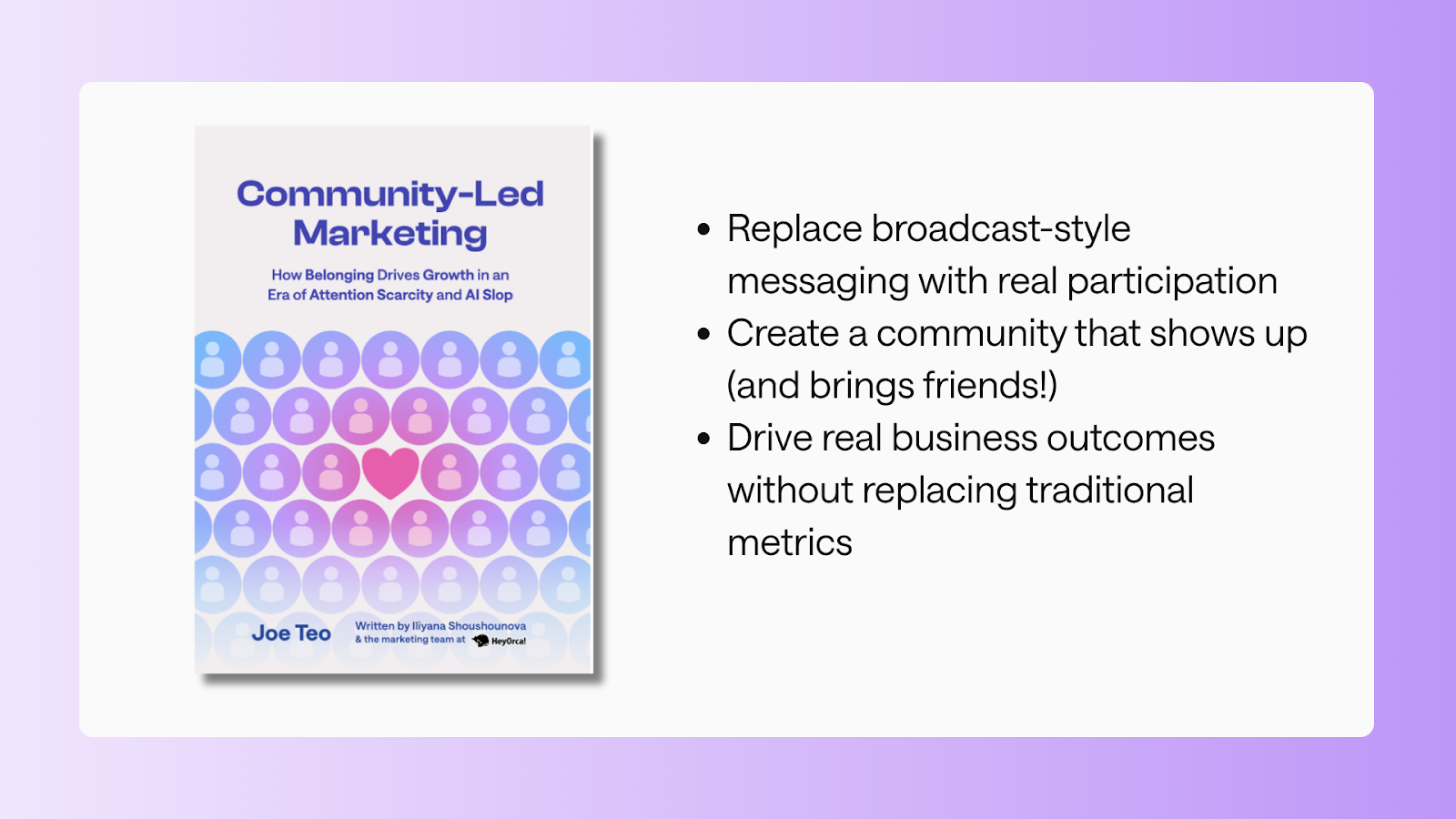
If you want a deeper, step-by-step breakdown of how to build a community-led strategy (and actually put this into practice), we’ve got you.
Download our Community-Led Marketing eBook to learn how to:
- Design content that drives real participation
- Turn your audience into active contributors
- Build a community that shows up, engages, and advocates for your brand
Still paying per seat for your social media tool? With HeyOrca, you get unlimited users – so your whole team (and clients!!) can collaborate without the extra cost. Plan, approve, and schedule your next post now.
Every member of your team deserves a seat at the table. That's why every HeyOrca plan comes with unlimited users. Choose the social media scheduler that helps you create, collaborate, and build community – without worrying about extra fees. Start your free trial.
Build stronger social media communities. HeyOrca brings your whole team together – with unlimited users!! – to plan, approve, and schedule content in one place. See it come together in minutes.
Looking for a social media tool built for teams and agencies? Plan, approve, and schedule your next post in minutes with HeyOrca – no credit card required.
.png)
Close all those tabs
Use HeyOrca to manage your social media content, approvals, and community in one place.
*no card required