10+ community-led marketing examples to inspire your strategy
Learn how 10+ brands use community-led marketing (with examples) and how you can use these strategies for your own brand.
TL;DR:
- Community-led marketing gives your community a real role in your brand — from shaping experiences and creating content to sharing ideas and spreading the word.
- These examples show how brands in all kinds of industries are turning participation into stronger relationships, more authentic marketing, and word-of-mouth.
- Don’t copy what these brands are doing. Look at the community-led principle behind each example and find a version that makes sense for your community.
Remember when you could hit Publish, grab a coffee, and come back to a post full of comments?
Yeah . . . those days are mostly behind us.
Social feeds are more crowded than ever. AI can generate thousands of posts in seconds. Organic reach keeps shrinking. And somehow, marketers are expected to do more with less.
So naturally, many teams respond by creating even more content.
The problem? More content doesn't automatically create more connections.
So instead of asking, "How can we reach more people?", community-led brands ask a different question:
"How can we create something people genuinely want to be part of?"
That's the heart of community-led marketing.
It's a marketing approach built around relationships instead of reach. Rather than treating people like the end of a sales funnel, community-led brands create spaces where people can learn, share ideas, help one another, and feel like they belong.
So, let's look at some brands that are doing community-led marketing and what you can take away from each one.
Examples of community-led marketing
Dr. Pepper theme song
Here’s a great example of community-led marketing in the wild!
TikToker @Romeo created a theme song for Dr. Pepper just for fun. Instead of letting the idea live as a one-off TikTok, Dr. Pepper asked for permission to turn it into an actual jingle – and credited Romeo as the creator.
They’re now using her original sound on TikTok, giving the community a direct hand in shaping the brand’s content. And judging by the comments, people are very into it.
What you can learn: invite the community to create, give them credit, and let their ideas become part of the brand.
Squishmallows
@Squishmallows turned a summer-themed post into an invitation to participate by asking their community to build their perfect summer day.
Instead of simply showing off their characters, they gave people something to contribute, and that turns a post from something to scroll past into something people can see themselves in.
What you can learn: make it easy for your community to jump in and make the content their own.
My Indie Coffee
Here’s another great example of participation leading to amplification.
@myindiecoffee invites its community to participate while also creating an opportunity to amplify other small businesses through its grab-and-go fridge.
It’s a simple idea, but it gives the community a reason to get involved and puts other businesses in the spotlight. Everyone gets something from the interaction.
What you can learn: you’re not just creating content for your community. You’re creating opportunities for people to contribute, connect, and help each other grow.
Psst! Want to see community-led marketing in action? Check out our roundup of brands building thriving communities and the lessons you can learn from them.
Downhome Magazine
We love how Downhome, a local Newfoundland brand, makes it easy for its community to join the conversation!
One of its simple prompts asks, “What Newfoundland and Labrador saying best describes your dog’s personality?” Bonus points if you include a photo.
It’s a small idea, but it works because it’s specific to the people Downhome knows best – and it gives them an easy reason to jump in and share.
What you can learn: Know your community, make participation easy, and give them a reason to join the conversation.
Senior living communities
Here’s a community-led marketing example from an industry you might not expect!
Senior living communities are actively listening to their residents through surveys, resident councils, and real conversations. But the important part? They’re actually doing something with what they hear.
Real residents and their stories replace stock photography, while resident feedback helps shape the experience and future marketing campaigns. They’re not just featuring their community in their marketing – they’re giving residents a say in what that community looks like.
What you can learn: Don’t just feature your community in your marketing. Give them a say in the experience you’re marketing, too.
Polaroid

There’s something very refreshing about a brand leaning into being human in the age of AI. And Polaroid is a great example!
Instead of trying to compete with an increasingly digital world, Polaroid is leaning into what makes analog photography different: the human experience.
It’s part of a bigger shift we’re seeing, too. More brands are creating experiences that get people offline, together, and actually participating instead of just scrolling.
What you can learn: You don’t always need to create more content. Sometimes, the best marketing is something people actually want to experience together.
Poppi
Poppi is putting its community to work – in the best possible way!
The brand hired 250 student ambassadors across more than 150 campuses. These ambassadors get insider access to Poppi, then bring the brand to life on their campuses through content and events.
And here’s where it gets really interesting: other students see their peers getting involved, get curious, and apply to become ambassadors themselves. More participation creates more participation.
Now that’s a community flywheel.
What you can learn: Give your community something to participate in, and make it easy for that participation to lead to more participation.
Curious Kids Club
Want to know what happens when you let your community help shape the content itself?
Curious Kids Club invited its paid subscribers to be part of a special podcast episode. The team asked their private community a question, then invited kids to send in their answers to be included in the show.
But they’re doing more than asking their community to contribute content. They’re also giving them a say in what participation can look like as the community grows.
What you can learn: Don’t just ask your community to contribute. Ask them how they want to be involved, too.
Viasox
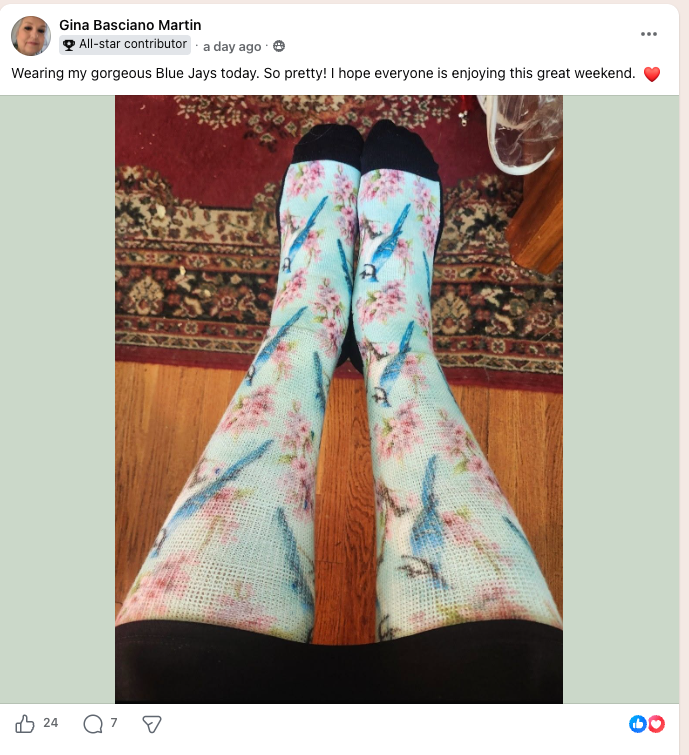
Viasox has a Facebook Group with more than 20,000 members, and it’s a great example of community-driven word-of-mouth.
Members share photos, recommend designs, and get excited about new product drops. When something new launches, they’re not waiting for the brand to create all the buzz – they’re creating their own mini-launches.
And the best part? They’re talking to each other, too. Members share their experiences and give one another reasons to check out what Viasox is doing.
The brand created the space, but the community is helping create the momentum.
What you can learn: Give your community something worth talking about, then give them space to talk about it with each other.
Banana Ball
Banana Ball already does a ton of fun content, but this example really caught our eye.
The owner is asking the community which city they want Banana Ball to come to next.
Instead of deciding behind the scenes and announcing the next stop, they’re bringing the community into the decision.
What you can learn: Let your community help shape what comes next. Sometimes, all you have to do is ask.
HeyOrca
And, yes, we’re going to toot our own orca horn for a second.
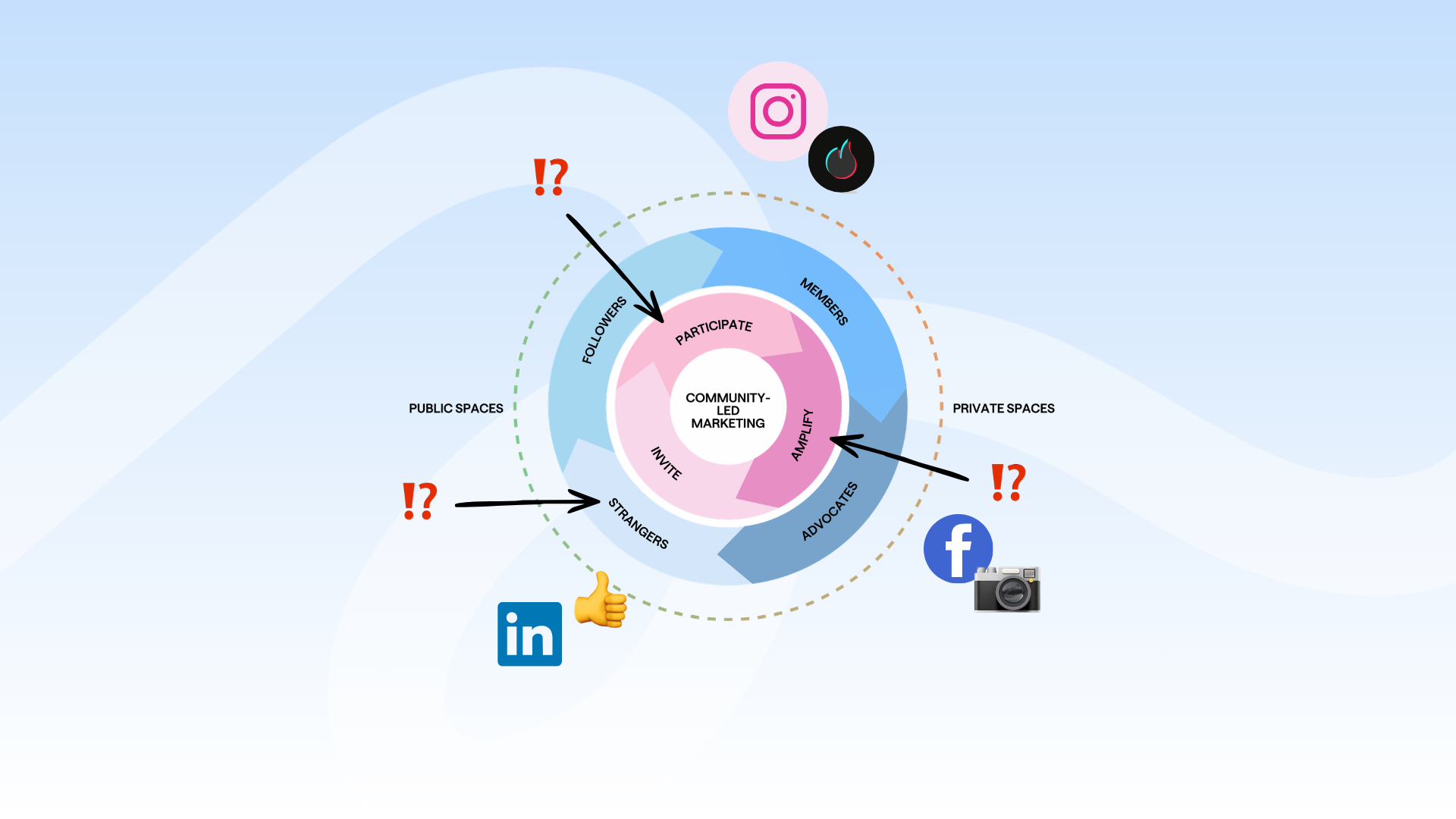
HeyOrca’s own community-led marketing journey is a great example of how community can grow when different marketing channels work together.
We started with many of the things you’d expect: a newsletter, webinars, and a Facebook Group.
But having those spaces didn’t automatically create a community.
We had to change what happened inside them.
Our newsletter evolved from mostly sharing HeyOrca updates into a source of social media news, trends, and insights that our community actually looks forward to.
Our webinars shifted away from being centred on HeyOrca and towards the topics social media managers wanted to learn about.
And inside our Facebook Group, the focus shifted from trying to get people to engage with HeyOrca to creating space for members to ask questions, share advice, and connect with each other.
Over time, participation became more natural.
Members started posting without being prompted. They answered each other’s questions. They shared resources, opinions, and experiences.
And the results compounded over time. HeyOrca saw a 300% increase in impressions, a 5,900% increase in post clicks, and an 80% decrease in cost per acquisition after investing more heavily in community-led marketing.
What you can learn: Don’t treat your newsletter, social channels, events, and community spaces as completely separate initiatives. Connect them so people have multiple ways to discover your brand, participate, and deepen their relationship with your community.
How to apply these community-led marketing examples to your strategy
You don’t need to copy what these brands are doing.
Instead, look at the principle behind each example and find a version that makes sense for your community.
Try asking:
Where can we invite participation?
Could you ask your community to vote on an upcoming webinar topic?
Where can we give people ownership?
Could customers help shape a future product, campaign, or piece of content?
Where can we recognize community members?
Could you feature a customer story, celebrate a milestone, or spotlight someone's expertise?
Where can we create connections between community members?
Could you introduce people who have similar challenges, interests, or experiences?
Where can we amplify what the community is already doing?
Could you turn a customer-created post, idea, or conversation into something bigger?
The best community-led marketing ideas don’t always start with a giant campaign.
Sometimes, they start with one simple question:
How can we give our community a bigger role in what we’re building?
Why community-led marketing works
Community-led marketing works because it reflects how people naturally make decisions.
Think about the last tool you signed up for.
Or the last newsletter you subscribed to.
Or the last webinar you attended.
Chances are, it wasn't because of one perfectly targeted ad.
Maybe a colleague recommended it.
Maybe someone in a Facebook Group shared their experience.
Maybe you kept seeing helpful content until you thought:
"Alright . . . these people seem to know what they're talking about."
That's how trust is built.
Not all at once. But through small, meaningful interactions over time.
That's exactly what community-led marketing is designed to create.
Instead of asking people to trust your brand immediately, it gives you countless opportunities to earn that trust – one conversation, one helpful resource, and one shared experience at a time.
Community-led marketing FAQS
What are the benefits of community-led marketing?
Community-led marketing helps brands build trust, increase engagement, strengthen relationships, and encourage word-of-mouth growth.
What are examples of community-led marketing?
Examples include hosting webinars, creating online groups, asking for community feedback, featuring community-created content, and celebrating customer wins.
What makes a marketing campaign community-led?
A community-led campaign gives people a meaningful opportunity to participate, contribute, or shape the brand experience. It goes beyond asking people to like, comment, or buy by giving them a role in the story.
How can social media managers use community-led marketing?
Start by creating content that invites participation. Ask questions that matter, feature community members, encourage people to share their experiences, and show how community feedback influences your decisions.
How do you start community-led marketing?
Start by inviting the right people to participate in a meaningful conversation or experience. Then, create opportunities for them to contribute, connect, and share with others.
Ready to put community at the centre of your marketing?
The brands in these examples didn’t build community by creating more content.
They created reasons for people to participate.
And you can start small.
Feature a customer. Ask for an opinion. Create something people can contribute to. Celebrate a community member. Or find a way to help people connect with one another.
Then keep going.
If you're ready to turn your marketing into a community people genuinely want to be part of, our community-led marketing strategy guide will show you exactly where to start.
Still paying per seat for your social media tool? With HeyOrca, you get unlimited users – so your whole team (and clients!!) can collaborate without the extra cost. Plan, approve, and schedule your next post now.
Every member of your team deserves a seat at the table. That's why every HeyOrca plan comes with unlimited users. Choose the social media scheduler that helps you create, collaborate, and build community – without worrying about extra fees. Start your free trial.
Build stronger social media communities. HeyOrca brings your whole team together – with unlimited users!! – to plan, approve, and schedule content in one place. See it come together in minutes.
Looking for a social media tool built for teams and agencies? Plan, approve, and schedule your next post in minutes with HeyOrca – no credit card required.
.png)
Close all those tabs
Use HeyOrca to manage your social media content, approvals, and community in one place.
*no card required