How to build an engaged Facebook Group in 2026
Learn how to create and grow an engaged Facebook Group, encourage community participation, and measure your group’s success.
TL;DR
- Facebook Groups are more than just another place to share content. They can give your community a space to connect, participate, and help one another.
- To build an engaged Facebook Group, start with a clear purpose, make participation easy, create consistent rituals, and focus on building relationships – not just growing your member count.
Facebook Groups might not be the shiny new thing anymore.
But if you're looking for a place to bring people together, spark conversations, and build relationships around a shared interest, they're still worth paying attention to.
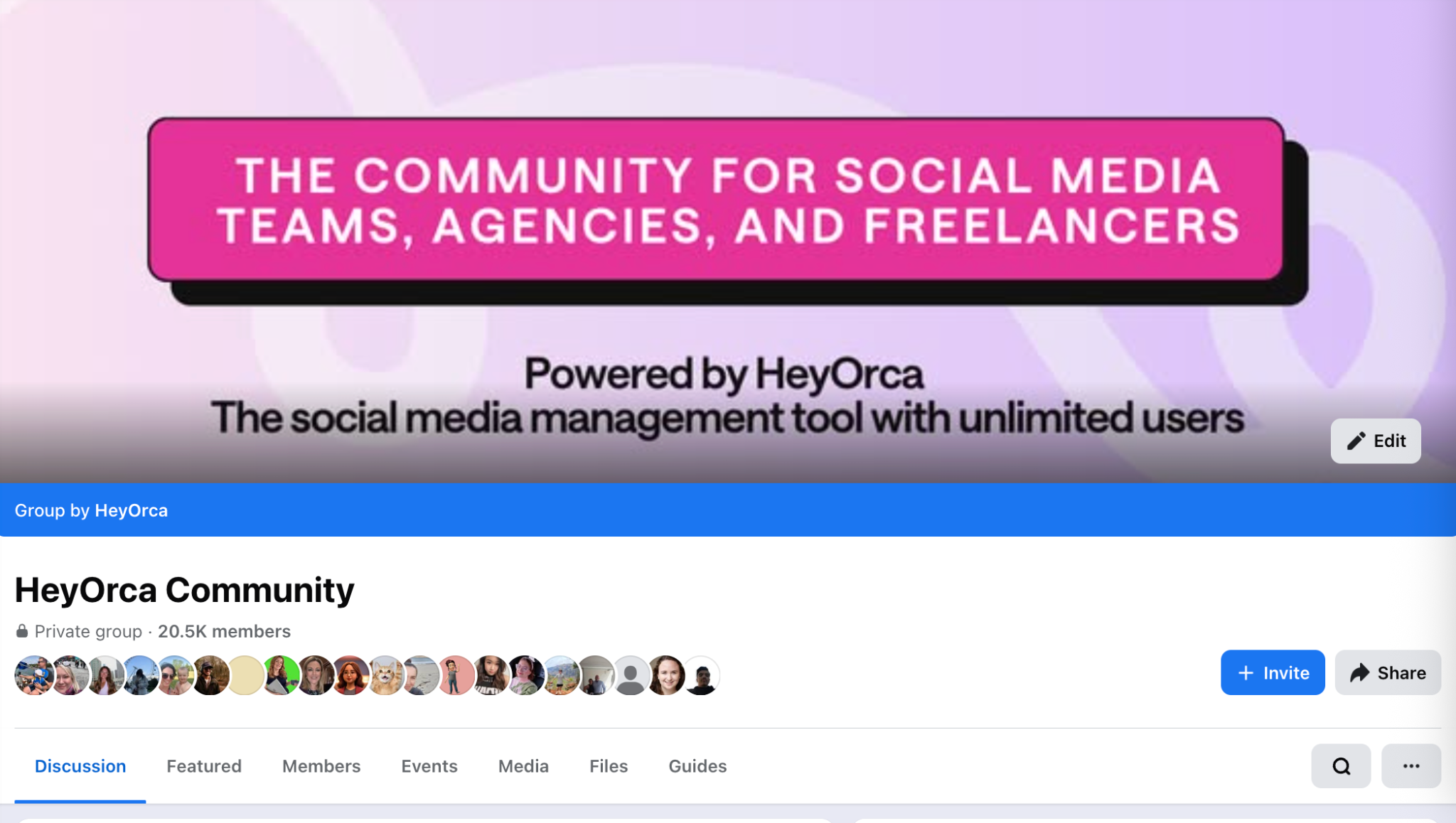
We've been running our Facebook Group for over five years and have grown it to more than 20,000 marketers.
It's become one of the most valuable community assets we have – not because it's another marketing channel, but because it's our corner of the internet where marketers help one another, share ideas, and build relationships.
What is a Facebook Group?
A Facebook Group is a dedicated space on Facebook where people with shared interests, goals, identities, or experiences can connect.
Members can ask questions, share ideas, start conversations, and support one another. Groups can bring together people around almost anything – from professional interests and hobbies to local communities and shared experiences.
For businesses, a Facebook Group can also create a space for deeper conversations with your community. But remember: creating a Facebook Group doesn't automatically create a community!
What is the difference between a Facebook page and a Facebook Group?
Facebook Pages and Facebook Groups serve different purposes.
A Facebook Page is typically used by businesses, brands, public figures, and organizations to share updates, publish content, and connect with their community.
A Facebook Group is designed for conversation and participation. Members can create posts, ask questions, share their experiences, and interact with one another.
Put simply: a Facebook Page is often where you share content. A Facebook Group can be where your community shares with each other.
Of course, the two can work together. Your Facebook Page can help people discover your brand, while your Facebook Group gives them a space to participate, connect, and build relationships.
Why create a Facebook Group?
There are plenty of community platforms available today, but Facebook Groups still have one huge advantage: people don't have to remember to visit them.
Unlike Slack, Discord, or forums, where members have to intentionally open another app, conversations inside Facebook Groups naturally appear in members' feeds.
Your community stays top of mind because it becomes part of people's everyday browsing habits.
The other reason we like Facebook Groups is that they allow you to own a space around your brand.
A Facebook Group is somewhere you can consistently bring people together.
Eventually, members stop interacting only with your content and start interacting with each other. That's when you've stopped building an audience and started building a community.
What should my Facebook Group be about?
One mistake we see brands make is assuming their Facebook Group has to revolve around their product, but the opposite is true.
Your group should revolve around the problem your product solves or the identity your customers share.
- If you're a leadership coach, create a place where leaders discuss challenges together.
- If you're a real estate agent, maybe it's a community around local neighbourhood events or buying homes in your city.
- If you're a bakery, perhaps it's a place where customers swap recipes and baking tips.
Your product can certainly be part of the conversation, but it shouldn't be the entire conversation.
The only exception is if your goal is customer retention. In that case, a private Facebook Group exclusively for customers can become an incredible value-add where users help each other, ask questions, and share ideas.
Whether your group is open or private really depends on whether your objective is acquiring new customers or creating a better experience for existing ones.
Before you start a Facebook Group
One piece of advice we suggest that often surprises people is this: don’t start with a Facebook Group, start with an email newsletter.
Think of it like a ladder. Social media captures attention. Your newsletter nurtures that attention. Your Facebook Group deepens it into relationships.
And by the time you invite someone into your community, they already know who you are and why they should care.
As a general rule of thumb, if your goal is a few hundred engaged members, try to build a newsletter with one or two thousand subscribers.
That gives you an initial group of people who already trust you enough to become founding members of your community.
If you're not there yet, that's perfectly okay.
Spend time participating in other Facebook Groups first. Observe what works, contribute to conversations, and understand the culture before creating your own. That was how we started.
How to make a Facebook Group
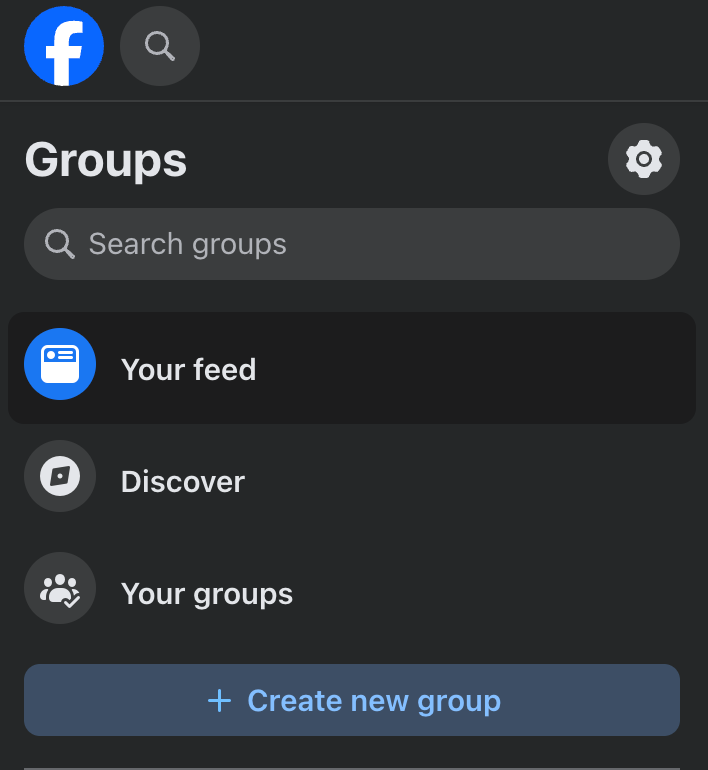
To make a Facebook group, open Facebook, click or tap the Menu on the left-hand side, then select Groups, and click Create or the + icon.
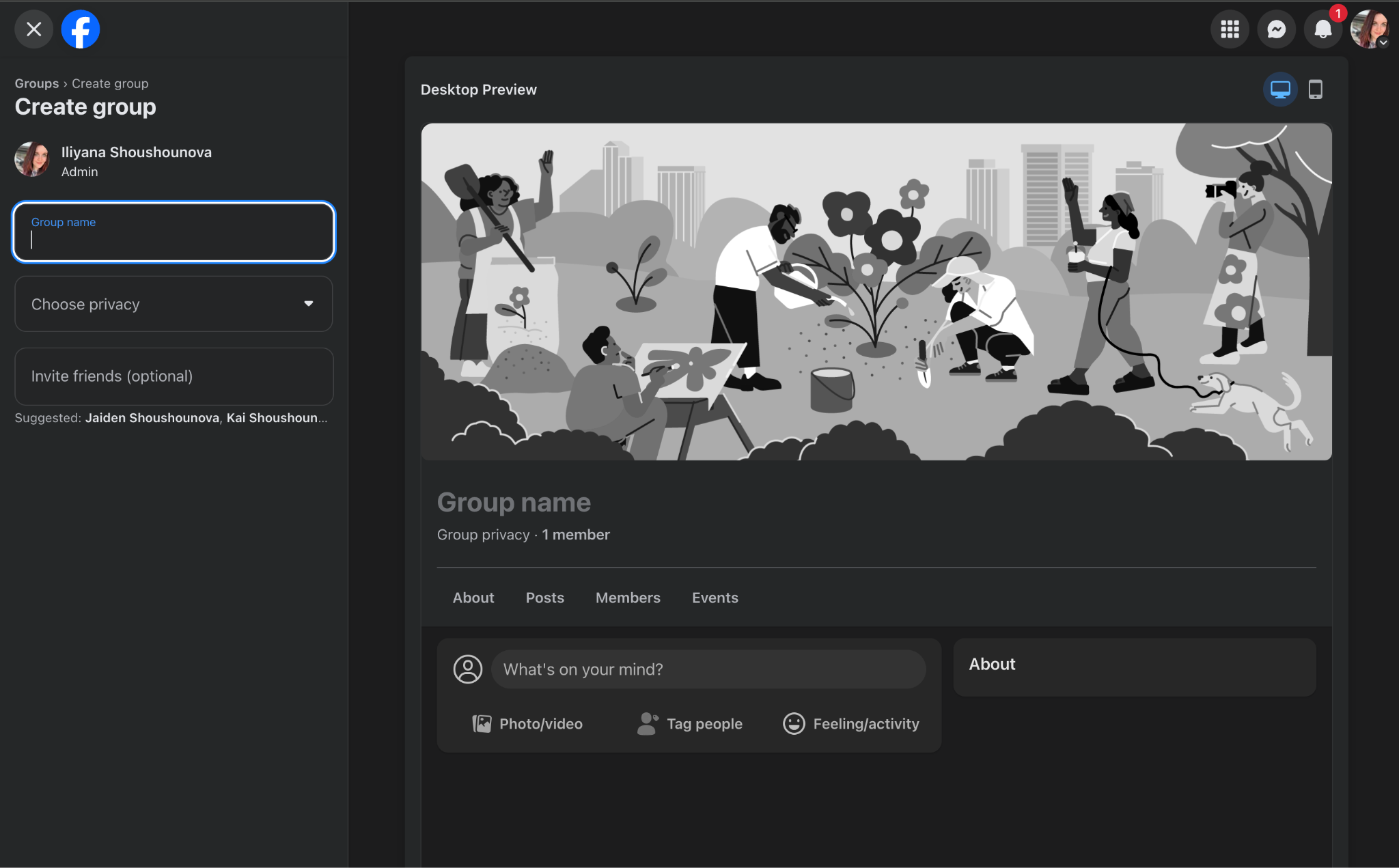
Next, enter your group name, choose your privacy setting (Public or Private), and click Create to launch your new community.
For official and detailed help steps directly from the platform, you can check out the Facebook Help Center.
How to get Facebook members
Launching a Facebook Group is actually the easy part. Creating reasons for people to return is the hard part.
Start by being crystal clear about the purpose of your group.
What should members expect every week that they can't easily get somewhere else?
- Maybe it's a roundup of local events every Monday.
- Maybe it's a weekly leadership discussion.
- Maybe it's social media critiques or recipe ideas.
Whatever it is, consistency matters more than volume because people begin associating your community with reliable value.
Also, spend time setting good rules from the beginning.
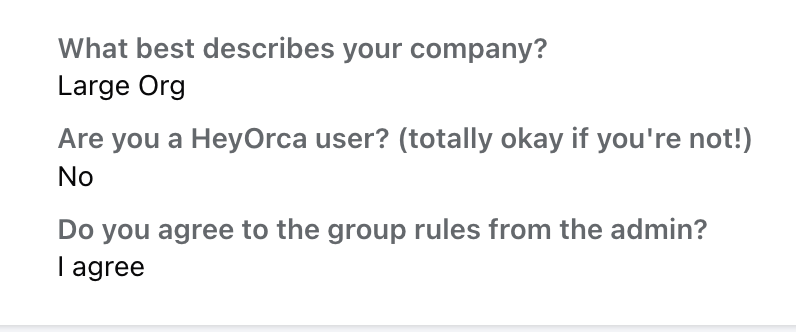
We don't allow Facebook Pages to join our group, we're cautious about accepting very new profiles, and we ask every applicant questions like "How did you hear about the group?" and "What do you hope to learn?"
Those questions help with moderation, but they're also an amazing source of customer research.
Questions we ask in our Facebook Group:
How to get people to engage in your Facebook Group
Most communities don't fail because they lack rhythm.
Some of the healthiest communities we've seen have simple rituals that members begin expecting.
Here are some examples:
- Welcome new members every Monday
- Post a discussion prompt every Wednesday
- Highlight a community member every Friday
- Host a monthly Ask Me Anything session
The specific ritual doesn't matter nearly as much as the consistency.
In the early days, you'll also need to lower the barrier to participation:
- Don't ask complicated questions that require long answers
- Ask fun questions
- Ask opinion questions
- Ask questions that someone can answer in thirty seconds
The goal isn't creating viral discussions – it's helping strangers become comfortable participating.
Over time, you'll notice a handful of members becoming regular contributors.
Those are your advocates. Celebrate them, highlight them, and tell their stories. Communities become self-sustaining when members feel like they're helping shape the culture instead of simply consuming content.
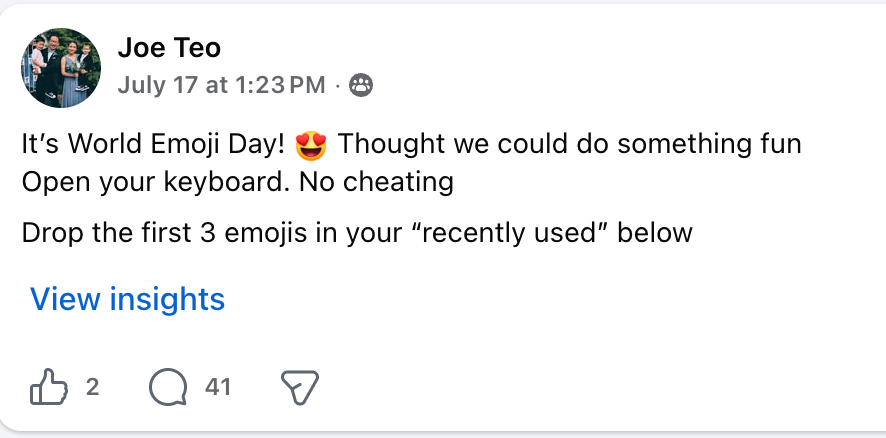
An example of an easy question that encourages participation:
An interview with our Facebook community manager
Who better to ask than the person who's been helping grow our Facebook Group every single day?
We sat down with Alyssa, our OG Facebook Group Community Manager, to ask what she's learned from helping grow our community to more than 20,000 members.

If someone was starting a Facebook Group today, what should they focus on during the first 90 days?
"Building a Facebook Group takes a lot of time, so in the first three months, I'd focus on getting into a good habit of consistently showing up within the group."
The first 90 days are less about growth and more about building habits. Showing up consistently, welcoming members, and creating conversations every week lay the foundation for everything that comes later.
How do you get members to participate instead of just lurking?
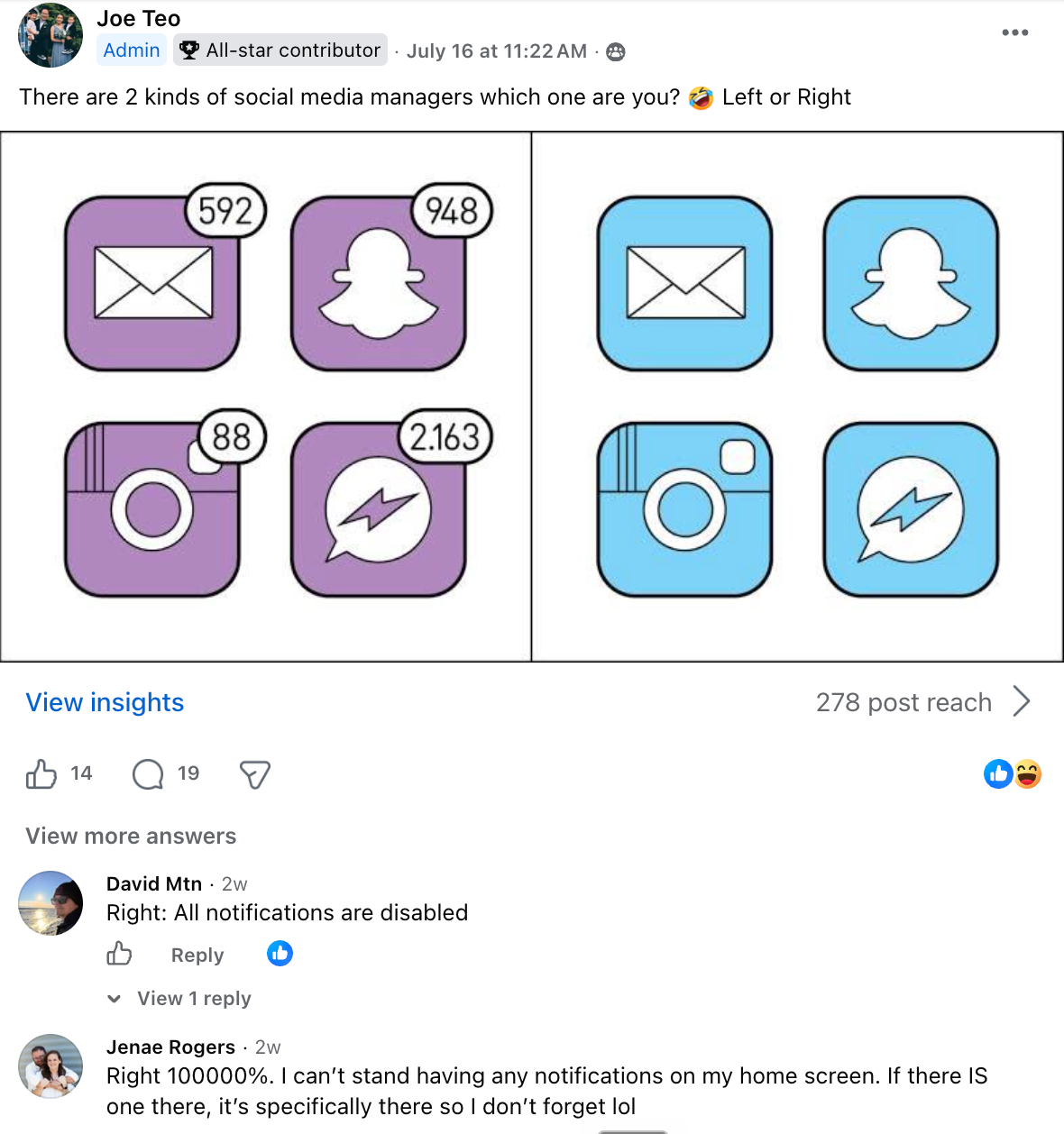
"Try low-lift engagement like polls or 'this or that' questions. These only take a few seconds of thinking, so members are much more likely to participate. As time goes on, you can introduce more medium-lift discussions once people feel comfortable contributing."
Instead of asking members to write thoughtful essays, ask simple questions that almost anyone can answer in a few seconds. Participation becomes easier, and over time members become comfortable contributing to bigger conversations.
What's the biggest mistake you see people make?
"People think their Facebook Group should take off within a few months, and when it doesn't, they give up."
Community building is a long game. Our Facebook Group didn't jump to 20,000 members overnight. Back in 2021, it was only a few thousand members. Consistency matters more than speed!
How do you balance growth while maintaining a healthy culture?
"Setting firm group rules and guidelines really helps maintain a healthy culture. Making sure everyone knows what's accepted – and what's not – from early on makes growing and maintaining your community much easier."
Rules aren't there to make communities restrictive – they're there to create an environment where people know what kind of conversations belong and feel comfortable participating.
How do you know if a Facebook Group is actually successful?
"Of course, you could track the number of members in your group, but I think an underrated sign that your community is successful is when you see your members helping one another."
When someone asks a question, and another member jumps in before you even have the chance, you've created something much bigger than a content channel -- you've created a community.
How do you measure Facebook Group success?
Building on Alyssa’s answer, participation is the metric that matters.
Pay closer attention to things like how many members are creating posts, how many comments discussions receive, how many people participate each week, how many members return after joining, and whether existing members are inviting others into the community.
Those are the signals that tell you whether you've built a place people genuinely want to belong to.
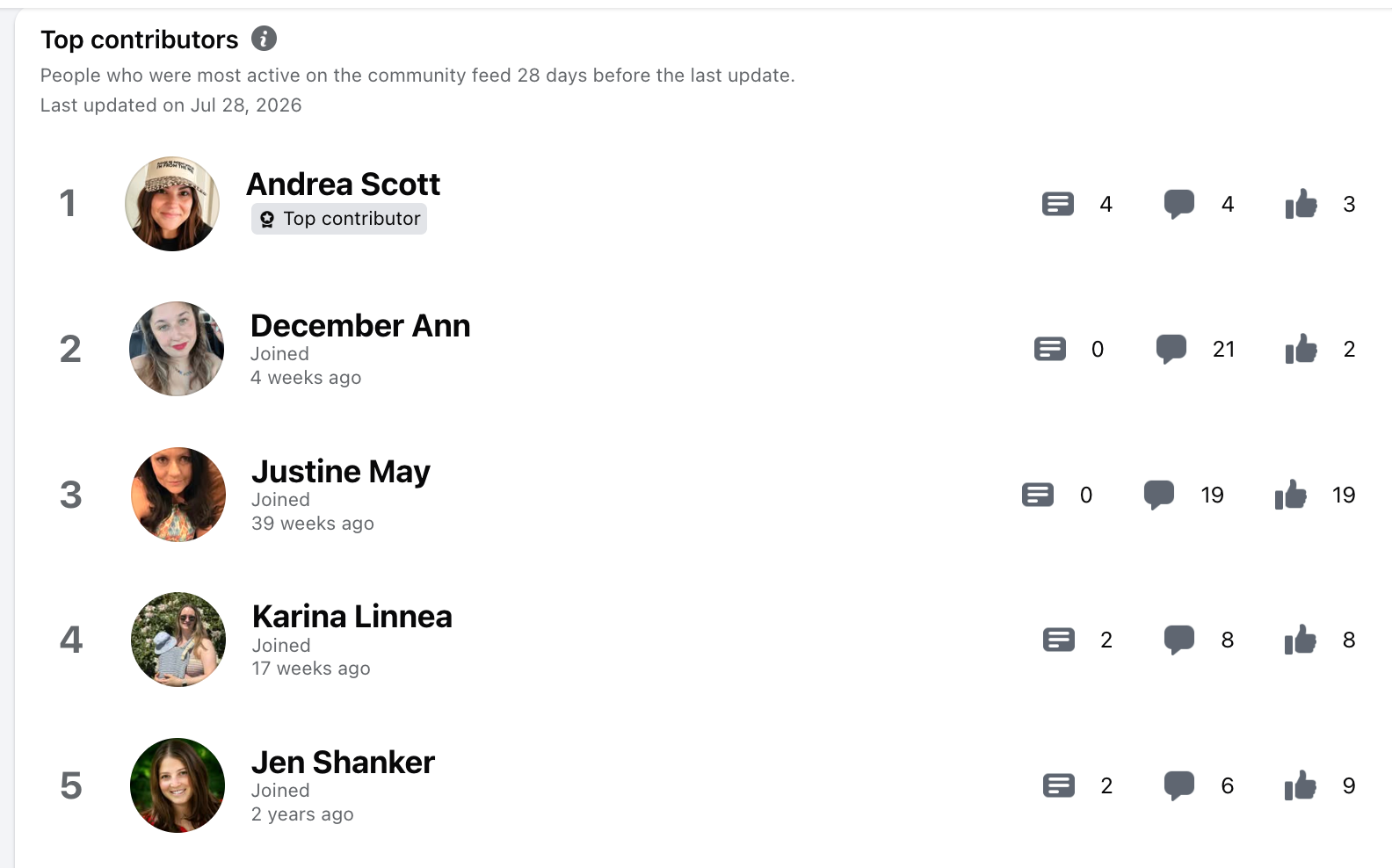
Facebook Groups also give you a list of top contributors:
Facebook Group FAQs
Is it better to create a Facebook Page or Group?
It depends on your goal. A Facebook Page is better for sharing brand updates and reaching new people, while a Facebook Group is designed for conversations and community participation. Many businesses use both: a Page to build awareness and a Group to create deeper connections.
Does a Facebook business account have to be tied to a personal account?
Yes. Facebook Pages and Groups are managed through a personal Facebook account, but your personal profile information isn't automatically visible to everyone who interacts with your business.
Is it better to have a private or public group on Facebook?
It depends on who you're trying to bring together. Public groups can make it easier for new members to discover your community, while private groups can create a more exclusive space for customers or members to have deeper conversations.
Are Facebook Groups still popular?
Yes. Facebook Groups are still a popular way for people to connect around shared interests, hobbies, professions, local communities, and experiences. For brands, they can also be a valuable space for building relationships and encouraging community participation.
How do you get people to participate in a Facebook Group?
Start by making participation easy. Ask simple questions, create polls, and introduce recurring posts or community rituals that give members a reason to return. As members become more comfortable, you can introduce deeper discussions and more opportunities for them to contribute.
How do you know if a Facebook Group is successful?
Don't just look at your member count. A successful Facebook Group is one where people actively participate, return to conversations, share their own ideas, and help one another. When members start connecting without your brand needing to lead every conversation, you're building a real community.
Summary
A Facebook Group is an investment in keeping attention instead of constantly chasing new attention. It's a place where your customers – and future customers – build relationships around a shared interest, and where your brand becomes the facilitator rather than the centre of every conversation.
We believe that the brands that win attention will have the strongest communities. And for many businesses, a Facebook Group is still one of the simplest and most effective places to start.
Still paying per seat for your social media tool? With HeyOrca, you get unlimited users – so your whole team (and clients!!) can collaborate without the extra cost. Plan, approve, and schedule your next post now.
Every member of your team deserves a seat at the table. That's why every HeyOrca plan comes with unlimited users. Choose the social media scheduler that helps you create, collaborate, and build community – without worrying about extra fees. Start your free trial.
Build stronger social media communities. HeyOrca brings your whole team together – with unlimited users!! – to plan, approve, and schedule content in one place. See it come together in minutes.
Looking for a social media tool built for teams and agencies? Plan, approve, and schedule your next post in minutes with HeyOrca – no credit card required.
.png)
Close all those tabs
Use HeyOrca to manage your social media content, approvals, and community in one place.
*no card required


.png)