5 community-led marketing strategies to build stronger communities

Learn 5 community-led marketing strategies to build belonging, earn trust, encourage participation, and turn meaningful connections into lasting advocacy.
TL;DR
- Turn your audience into a community. As Lauren from Canva shared, connection, participation, and belonging can turn an audience into advocates.
- Try YAAS (Yapping As A Strategy). Chi from beehiiv recommends spending 30 minutes a week joining conversations to build relationships and find content ideas.
- Prioritize trust over follower counts. Sennah from CrowdRiff showed why niche creators with smaller, relevant communities can have more influence than creators with massive followings.
- Let your community shape what comes next. Victoria from VIASOX turned a community member’s love of sloths into a product line and an annual tradition.
- Look beyond engagement metrics. Anjali from Candybox Marketing encourages marketers to measure community health through participation, referrals, and the relationships that support long-term growth.
Getting people's attention is one thing. Giving them a reason to stick around, participate, and connect with your brand is another.
With social feeds crowded with content, community-led marketing offers a different way to approach growth. Instead of focusing only on reach and engagement, it puts relationships, belonging, and participation at the centre of your marketing strategy.
But what does that look like in practice?
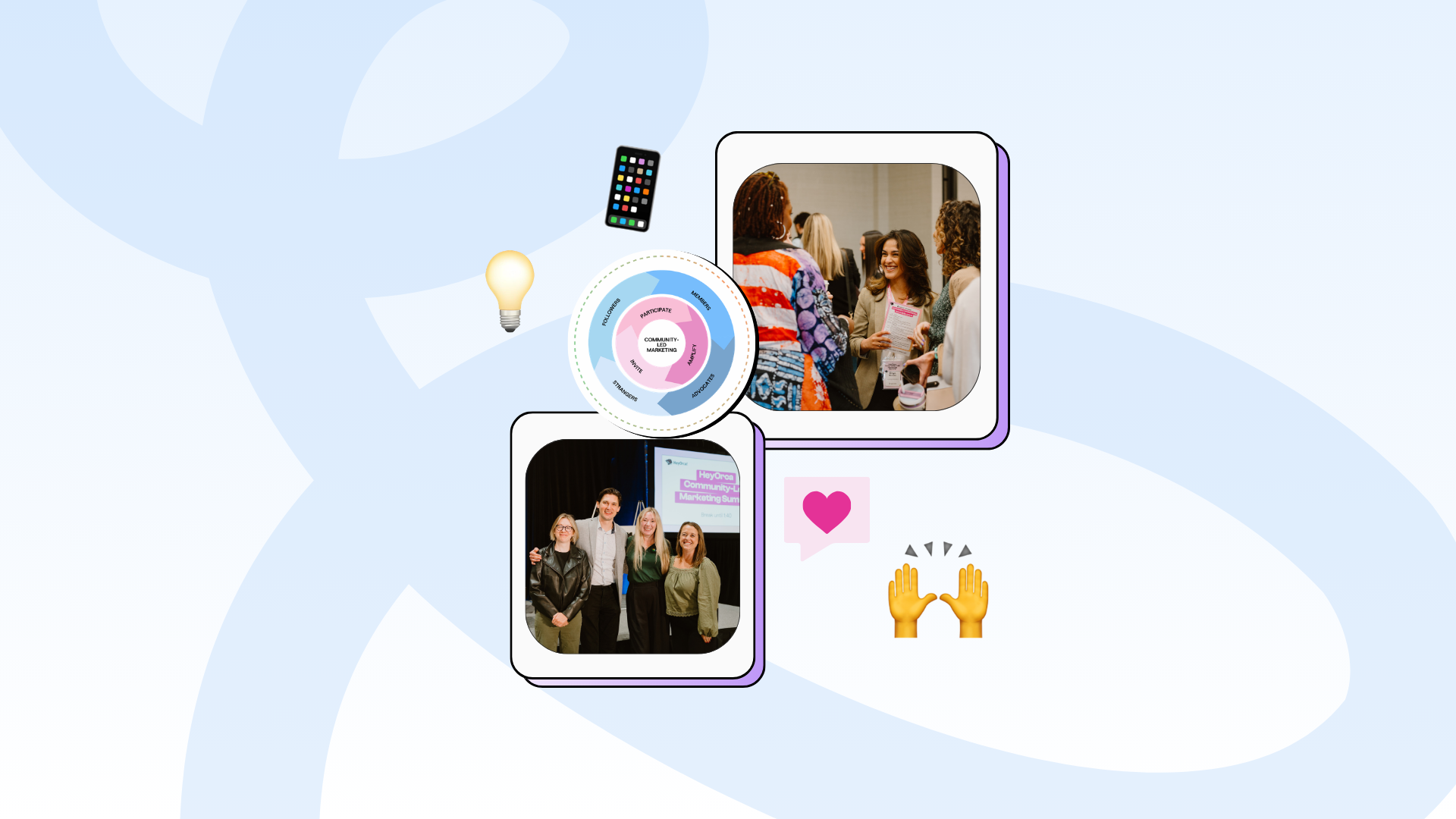
At our fourth Community-Led Marketing Summit, marketers from Canva, beehiiv, CrowdRiff, VIASOX, and Candybox Marketing shared real-world examples of how brands can build stronger communities. Their insights offer practical lessons you can apply to your own marketing.
So, whether you're starting a community from scratch or finding new ways to nurture one, here are five community-led marketing strategies from the summit, along with ways to put them into practice.
1. Build belonging, not just an audience

Lauren Freud, Campaigns Manager at Canva, opened her presentation with a question: “We got really good at reaching people. Did we forget how to connect with them?”
Marketers know how to grow an audience. We have strategies for increasing reach, attracting followers, and getting our content in front of new people. But what happens after someone discovers your brand?
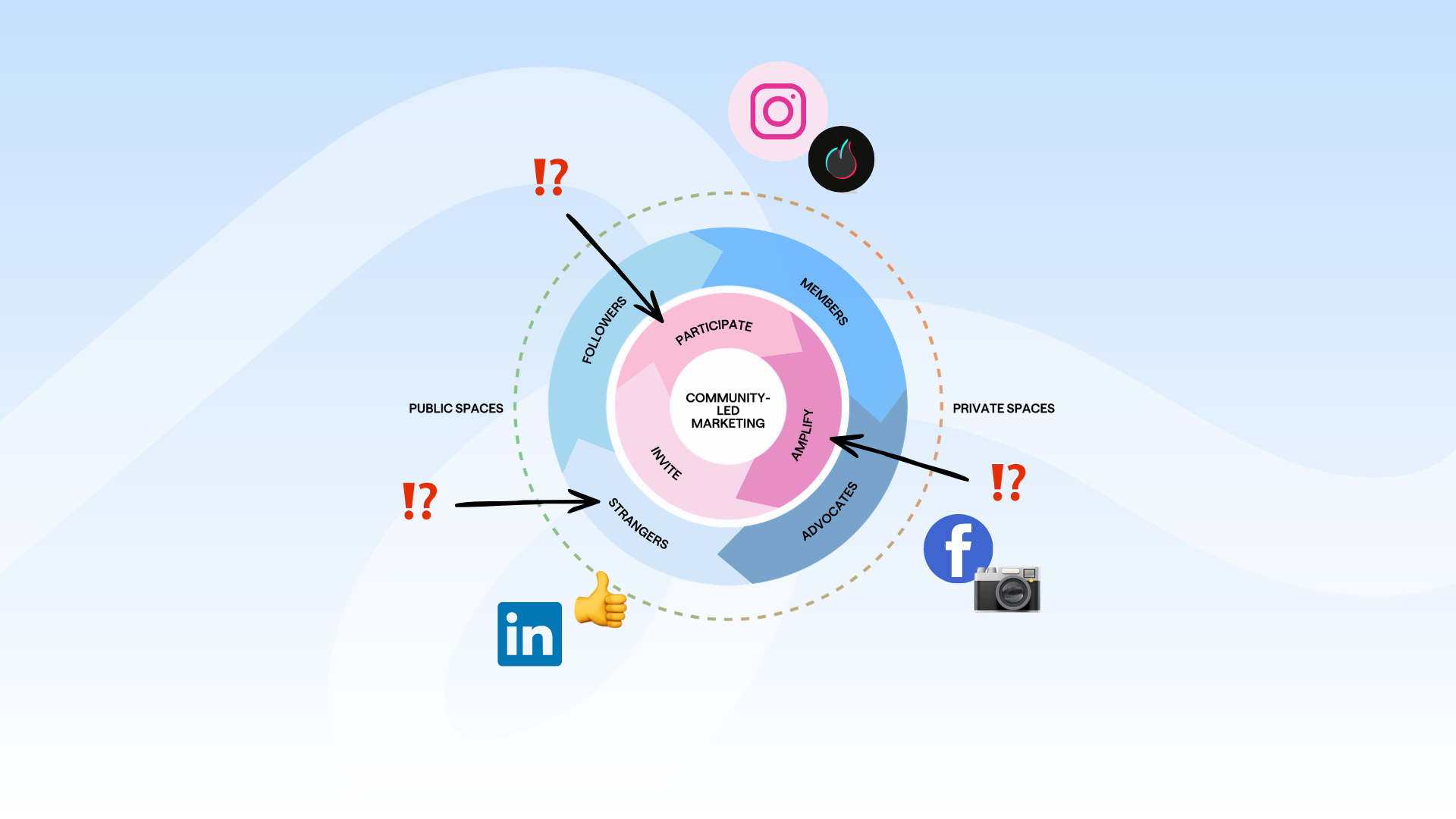
Lauren explored how people can move from discovering a brand to connecting with it, being invited to participate, and eventually feeling like they belong. That sense of belonging is what helps an audience become a community – and, over time, a group of advocates.
The important distinction is that a community isn't defined by how many people you reach. It's defined by the relationships people build and the role they play.
You don't need thousands of members to get started, either. A small dinner with 10 customers, a regular meetup, or an online space where people can get to know each other can all create opportunities for connection.
How to put this into practice
Give people a reason to participate beyond consuming your content.
You could invite customers to share how they use your product, host a regular meetup around a shared interest, or create a space where members can ask questions and help each other.
The goal isn't to make every interaction about your brand. It's to create experiences people genuinely want to be part of.
When people feel connected to a community, they're more likely to contribute to it, invite others in, and advocate for something they feel part of.
2. Treat conversations as a marketing strategy
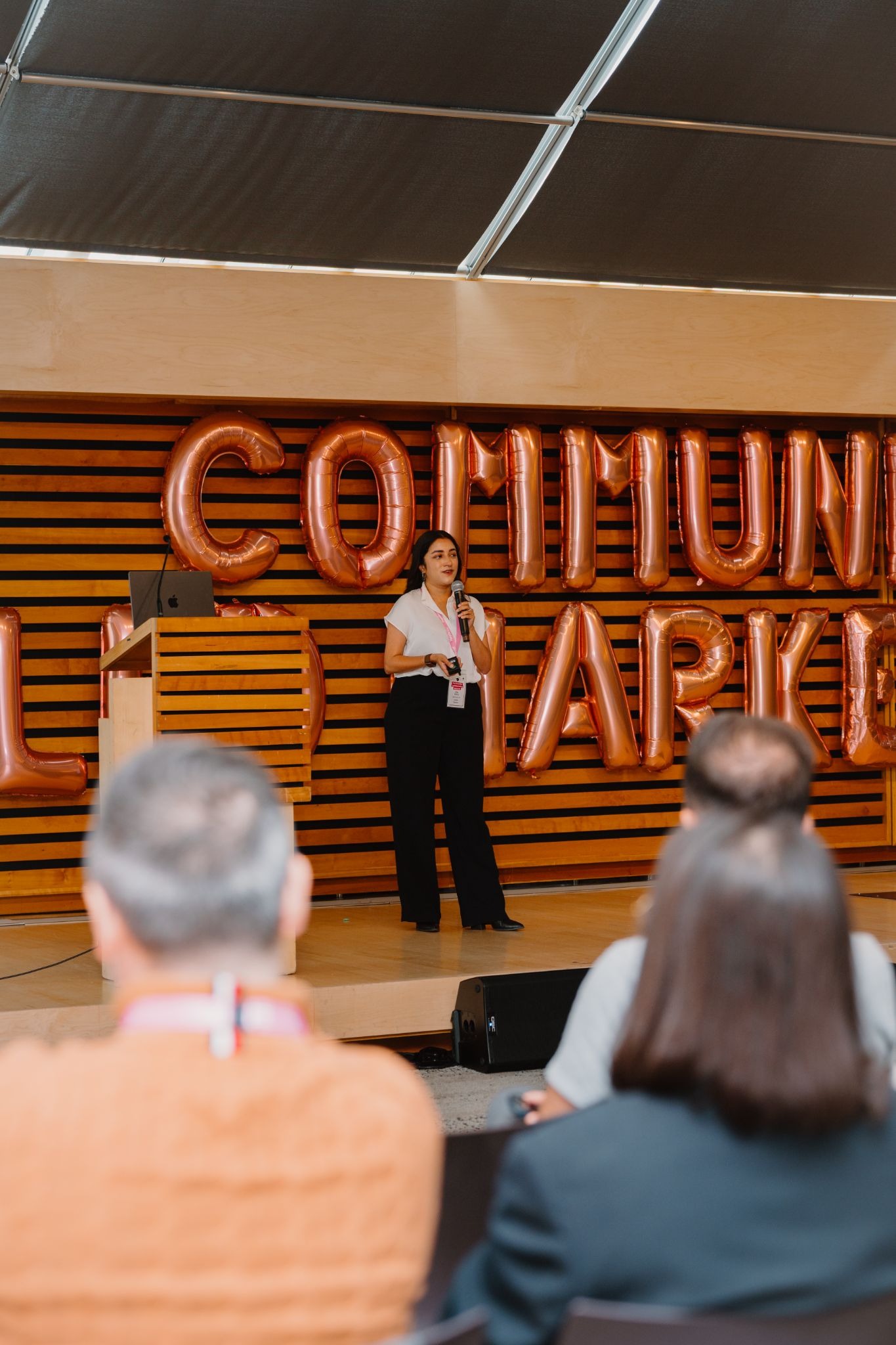
Chi Thukral, Global Social Lead at beehiiv, introduced one of the summit's most memorable acronyms: YAAS, aka Yapping As A Strategy.
Social feeds are crowded, and AI has made it easier than ever to produce content at scale. Meanwhile, the comments section can offer something increasingly valuable: an opportunity for actual human conversation.
Joining conversations on social media is also a great way to build relationships without creating another post. You can connect with creators, learn from other brands, and get on the radar of people you might not otherwise reach.
But there's another benefit to talking with your community: people will tell you what they care about in their own words.
Their questions, frustrations, opinions, and disagreements can reveal things that are difficult to uncover through content performance metrics alone.
How to put this into practice
Set aside 30 minutes each week to participate in conversations.
Reply to comments on your posts, join relevant discussions, and engage with creators and brands your community already follows. Focus on adding something useful rather than commenting just to get noticed.
Pay attention to the conversations that stand out. What questions keep coming up? What are people struggling with? What opinions are they sharing that you haven't addressed in your content?
Use those insights to inform your next post, video, newsletter, or campaign.
3. Work with creators your community already trusts
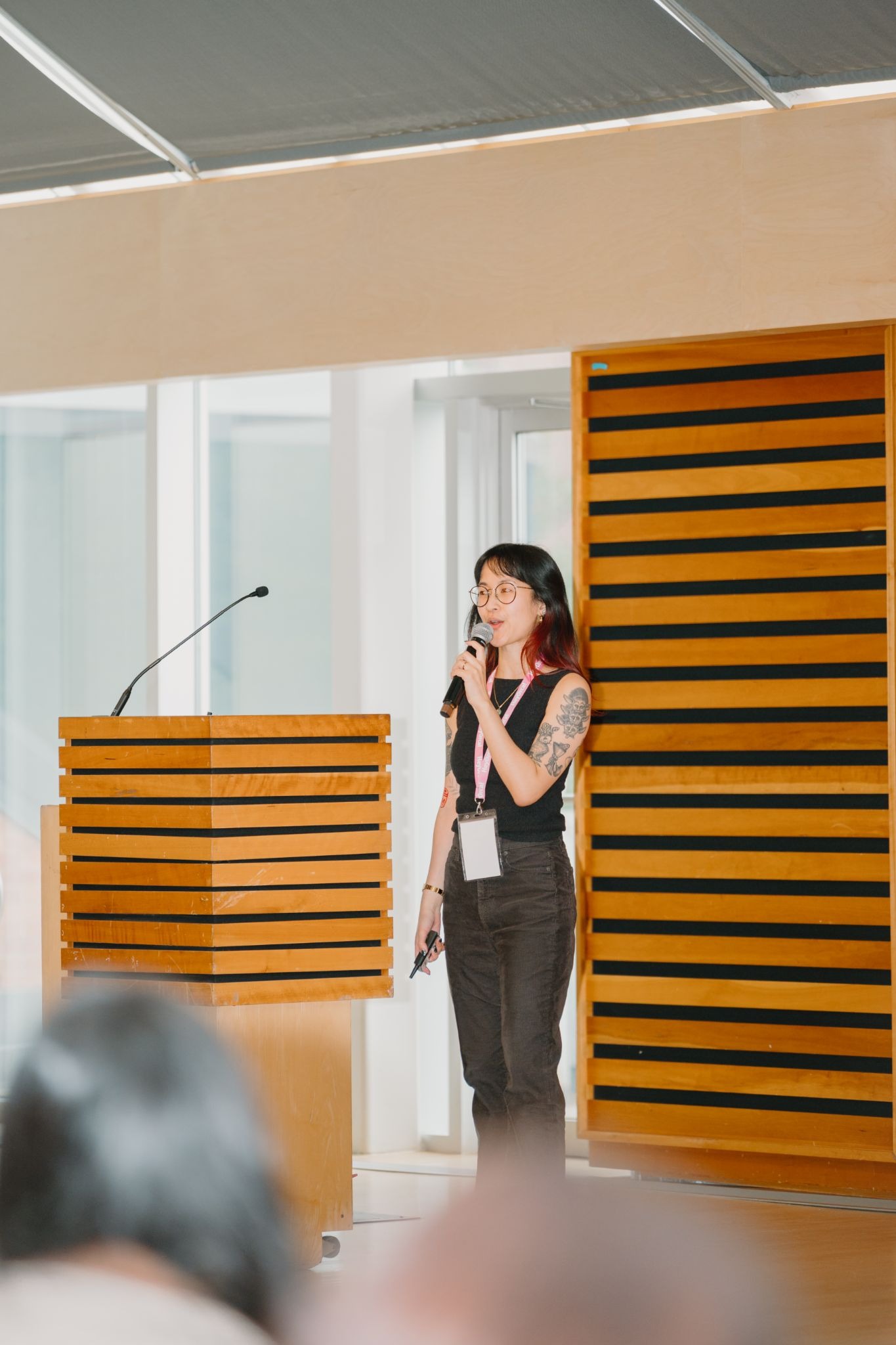
Sennah Yee, Senior Social Media Manager at CrowdRiff, highlighted the value of local and niche creators.
A local creator understands the people, places, and culture they're talking about, and a niche creator has built relationships with people who share a particular interest. Their influence comes from that connection, not just the size of their following.
For example, a creator with 8,000 highly relevant followers may have more influence within a particular community than someone with 500,000 followers whose audience has little connection to the brand.
That doesn't mean reach is irrelevant. It just means reach is only one part of the picture.
When you're choosing creators to work with, consider whether their community trusts them, whether their interests align with your brand, and whether the partnership would feel natural to the people who follow them.
How to put this into practice
Start by identifying the communities you want to connect with.
Look for local voices, niche creators, and people who already talk about the topics your community cares about. Pay attention to the conversations they generate, the relationships they have with their followers, and how they interact with other people in their space.
Then, think beyond a one-off sponsored post.
Could you invite a creator to contribute to a community event, collaborate on a resource, participate in a discussion, or help shape a campaign?
4. Leave room for your community to surprise you

Victoria Orevkova, Community and Social Lead at VIASOX, shared a great example of what can happen when brands leave room for spontaneous participation.
Someone in the company's Facebook group casually mentioned that they loved sloths. The conversation grew into a line of sloth compression socks, and the community now celebrates Sloth Socks Day every year.
Victoria also shared a blanket that community members had made for her as a thank-you for being their community manager. It was a lovely example of how relationships within a community can grow beyond the original reason people came together.
Neither outcome was something a content calendar could have predicted.
These moments illustrate an important part of community-led marketing: your community isn't just there to respond to what you create. Its members can help shape what happens next.
Their interests can inspire content, their feedback can influence products, and their shared experiences can turn into traditions that give people another reason to return.
How to put this into practice
Create opportunities for people to share ideas, then pay attention to what happens next.
Ask members what they're interested in, invite feedback on upcoming projects, or give people space to start conversations that aren't tied to your latest campaign.
When an idea gains traction, explore it. You don't have to turn every suggestion into a product or launch a campaign around every conversation. Sometimes, the best response is simply to participate and let the moment unfold.
The key is to avoid treating your community like a focus group that only exists to answer your questions.
Give people the freedom to contribute in ways you didn't plan for. You might discover a new content series, a shared tradition, or an opportunity to make your community feel even more connected.
5. Show the value of community beyond engagement metrics

Anjali Oberoi, Senior Social Media Manager at Candybox Marketing, spoke about making B2B social media engaging and demonstrating its value to leadership.
For community-led marketers, that starts with looking beyond surface-level engagement.
Likes and impressions can tell you whether content reached people or prompted a reaction. But they don't necessarily tell you whether people value being part of your community.
Are members coming back? Are they contributing to conversations? Are they interacting with each other, not just your brand? Are they inviting other people to join?
These behaviours can offer a clearer picture of whether a community is becoming a meaningful part of people's lives.
Over time, a healthy community can also contribute to broader business outcomes, including word of mouth, organic brand mentions, referrals, retention, and brand demand.
Keep in mind that those outcomes won't necessarily appear after one post or event. Community is built through consistent experiences and relationships that develop over time.
How to put this into practice
Start by defining what a healthy community looks like for your brand.
Choose signals that reflect the behaviours you want to encourage, such as repeat participation, member-to-member conversations, referrals, or people sharing your brand without being asked.
Then, connect those signals to the business outcomes that matter to your team.
For example: if your community helps customers get more value from your product, look at whether active members return, share advice, or help other customers solve problems. If you're building brand advocacy, pay attention to organic mentions and referrals over time.
You don't need to prove that every community interaction directly generated revenue. Instead, build a clearer picture of how relationships contribute to the business.
Community-led marketing FAQs
How can brands build a community on social media?
Brands can build communities on social media by starting conversations, responding thoughtfully to comments, creating opportunities for members to connect, and listening to what people care about. Consistency matters, but so does giving people a meaningful role beyond consuming content.
How do you measure community-led marketing?
Look beyond likes and impressions to track signals such as repeat participation, member-to-member conversations, referrals, organic brand mentions, and retention. The right metrics depend on your goals, but they should help you understand whether people are building relationships and finding value in the community.
Why are creators important to community-led marketing?
Local and niche creators often have established relationships with communities that share their interests. Partnering with creators whose values and expertise align with your brand can help you build trust, participate in relevant conversations, and contribute value to communities that already exist.
How to put community-led marketing into practice

You don't need to launch a massive community initiative to get started with community-led marketing. You can begin by making small changes to how you create content, start conversations, and invite people to participate.
Give people a reason to connect with your brand and each other, listen to what they care about, make space for their ideas, and pay attention to the relationships that develop over time.
Want to explore the approach in more depth? Read our free community-led marketing eBook to learn how belonging can help build stronger communities and support long-term growth.
Still paying per seat for your social media tool? With HeyOrca, you get unlimited users – so your whole team (and clients!!) can collaborate without the extra cost. Plan, approve, and schedule your next post now.
Every member of your team deserves a seat at the table. That's why every HeyOrca plan comes with unlimited users. Choose the social media scheduler that helps you create, collaborate, and build community – without worrying about extra fees. Start your free trial.
Build stronger social media communities. HeyOrca brings your whole team together – with unlimited users!! – to plan, approve, and schedule content in one place. See it come together in minutes.
Looking for a social media tool built for teams and agencies? Plan, approve, and schedule your next post in minutes with HeyOrca – no credit card required.

Close all those tabs
Use HeyOrca to manage your social media content, approvals, and community in one place.
*no card required