How to build a community-led marketing strategy (6 steps)
Learn how to build a community-led marketing strategy that creates belonging, encourages participation, and turns community members into advocates.
Most social media marketers know community matters.
They know people are tired of being sold to. They know trust is harder to earn than it used to be. And they know that the brands people love most usually have something bigger than a product behind them – they have a community.
But knowing community matters and building one are two very different things.
Many brands launch a Facebook Group, start a newsletter, or create a Discord server and call it a community. Then they wonder why nobody participates.
That's because communities aren't built through platforms.
They're built through belonging.
A community-led marketing strategy helps you create that sense of belonging by bringing people together around a shared identity, giving them opportunities to participate, and creating spaces where they can connect with your brand and each other.
In this guide, we'll walk through how to build a community-led marketing strategy from the ground up.
What is a community-led marketing strategy?
A community-led marketing strategy is an approach to marketing that prioritizes participation, relationships, and belonging over reach alone.
Instead of treating people like an audience to market to, community-led marketing treats them as active participants in the brand experience.
The goal is to create an environment where people feel connected to your brand and to one another. When that happens, trust grows, loyalty deepens, and advocacy becomes a natural outcome.
Step 1: Define your community identity
Before you launch a Facebook Group, create a newsletter, or start planning content, you need to understand who your community is.
One of the biggest mistakes brands make is defining their community entirely by job title or demographics.
For example:
- Social media managers
- Marketing directors
- Small business owners
- Agency owners
While these labels help with targeting, they don't create belonging.
Community identity goes deeper than that.
Ask yourself:
- What does this group care about?
- What challenges bring them together?
- What values do they share?
- What are they trying to achieve?
Then identify what your brand and community have in common.
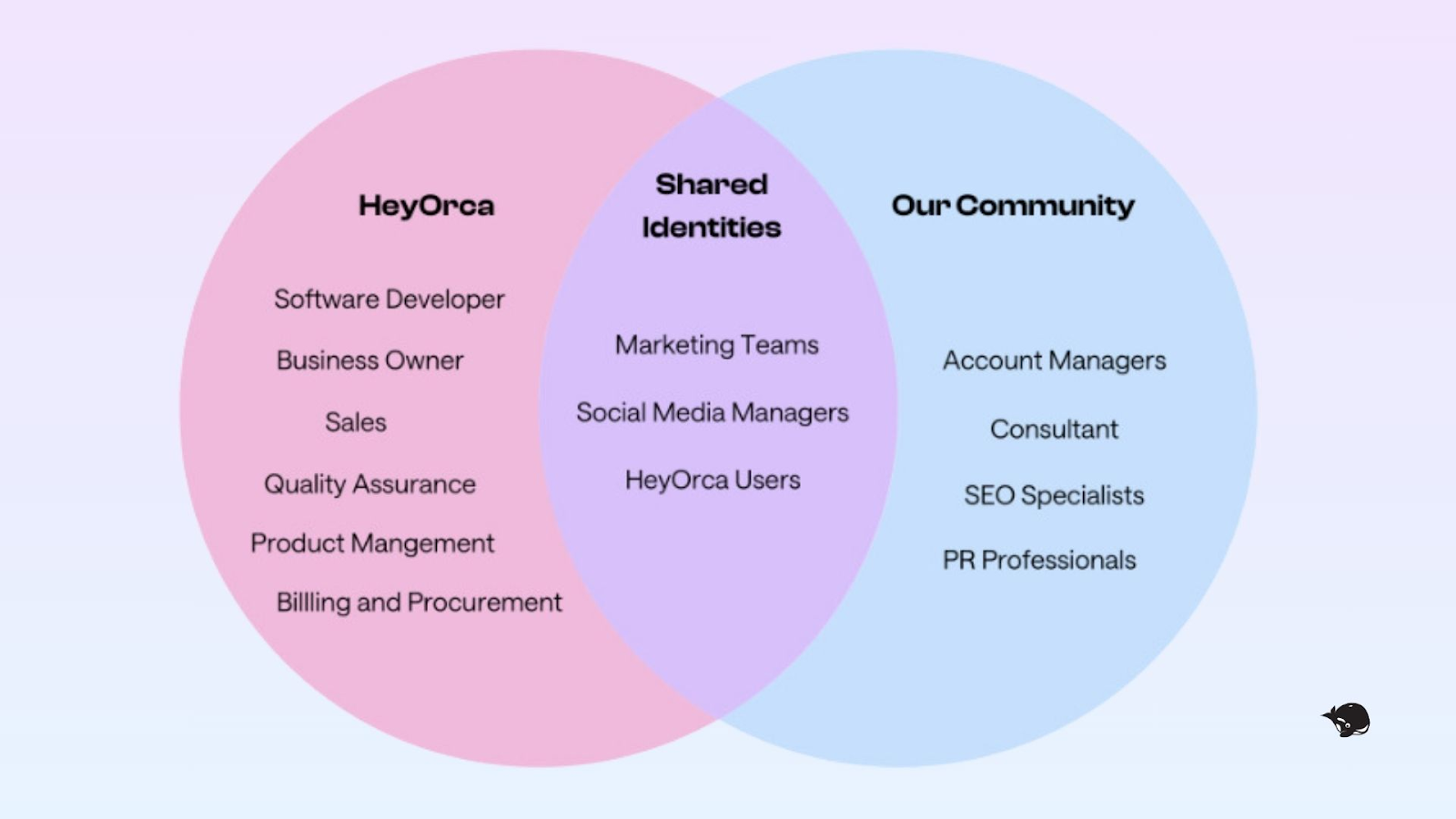
At HeyOrca, our internal team includes software developers, marketers, sales professionals, customer support specialists, quality assurance teams, and business leaders.
Meanwhile, our community includes social media managers, consultants, account managers, PR professionals, agency teams, and content creators.
Those groups may have different job titles, but they share common ground:
- They work in marketing.
- They care about building communities.
- They want to create better social media experiences.
- Many of them use HeyOrca to do that.
Those shared experiences help create community identity.
The stronger that identity becomes, the easier it is for people to say:
"These are my people."
And that's where belonging begins.
Step 2: Choose the right spaces for participation
Once you understand who your community is, the next question becomes:
Where do they naturally gather?
A common mistake is trying to build a community everywhere at once.
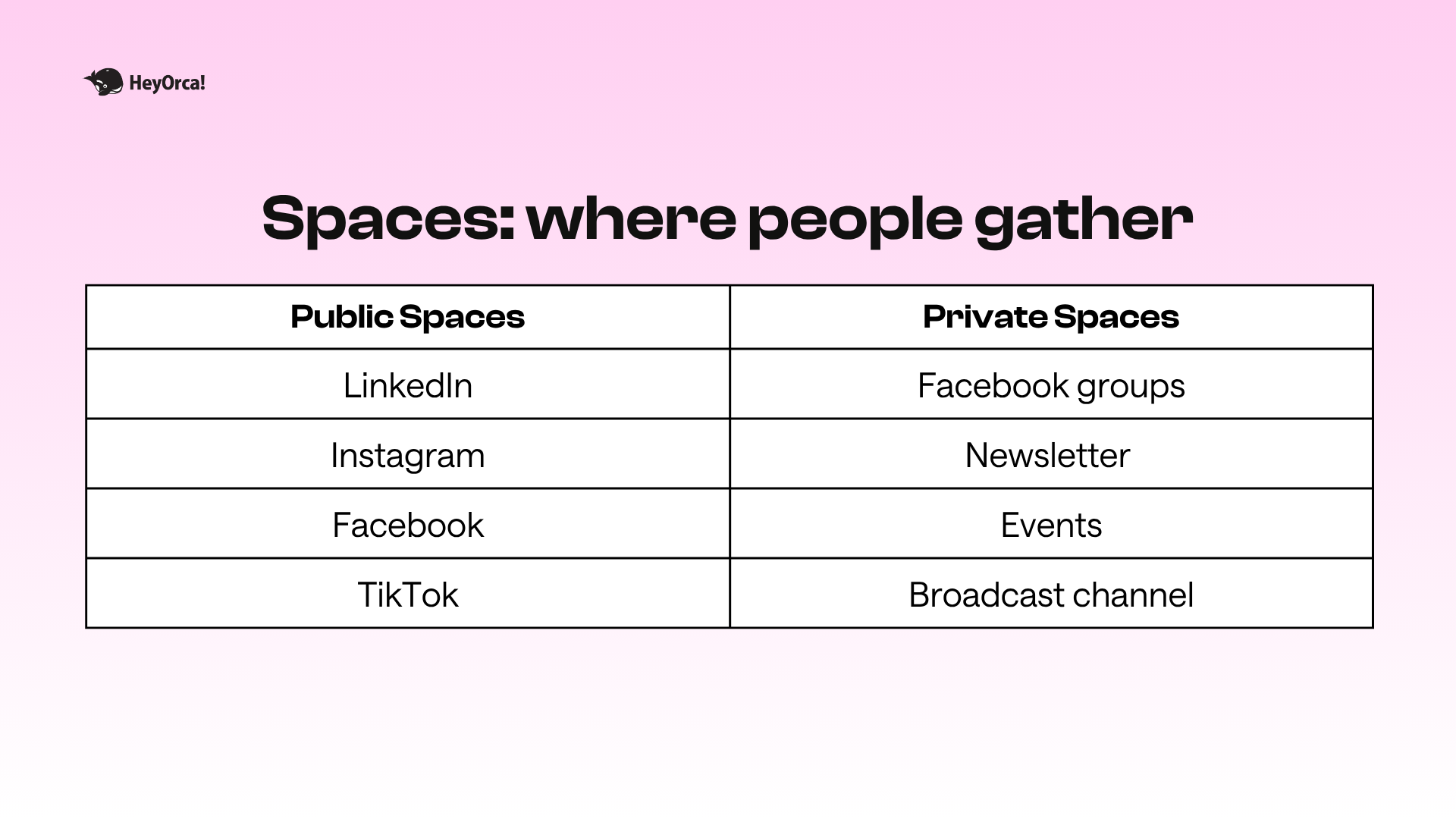
You don't need a Facebook Group, Discord, Slack workspace, LinkedIn Group, newsletter, podcast, and TikTok account all at the same time.
In fact, spreading yourself across too many spaces often makes participation harder.
Instead, focus on where your community already spends time.
For example, at HeyOrca, we invested heavily in our Facebook Group for social media managers and our newsletter because that's where our community was already having conversations.
If your community consists of business executives, LinkedIn may be the best place to start.
If your community is made up of book enthusiasts, BookTok might be a much better fit.
The goal isn't to be everywhere.
The goal is to be where your people are.
Start with one space.
Learn what encourages participation.
Build momentum.
Then expand into additional spaces as your community grows.
Step 3: Create content that invites participation
Having a community doesn't mean posting content every day.
And it definitely doesn't mean posting and disappearing.
You can publish content seven days a week, but if nobody is engaging, contributing, or interacting, you don't have a community.
You have a container.
Community-led content is different because it invites people to participate.
Instead of asking: "What do we want to say?" Ask: "What conversation do we want to start?"
Here are a few ways to get started:
Create relatable content
One of the easiest ways to encourage participation is by creating content that people see themselves in.
At HeyOrca, we do this through relatable skits for social media managers.
Whether it's chasing client approvals, dealing with last-minute requests, or managing multiple social channels, these videos resonate because they reflect real experiences.
When people see themselves in your content, they're more likely to comment, share, and join the conversation.
Ask questions
Sometimes the simplest tactic is the most effective.
Ask your community:
- What's your biggest challenge right now?
- How would you handle this situation?
- What advice would you give someone starting out?
Questions create opportunities for people to contribute rather than consume.
Share community stories
Highlighting members of your community shows people that participation matters.
Feature customer wins.
Share community success stories.
Celebrate milestones.
The more visible participation becomes, the more likely others are to join in.
Create polls and discussions
Not everyone feels comfortable writing a long comment.
Polls create a low-friction way for people to engage.
They're also a great way to gather insights about your community while encouraging participation.
Step 4: Turn engagement into participation
Many marketers focus on engagement metrics like likes, reactions, and impressions.
While those metrics can tell you if people saw your content, they don't necessarily tell you if you're building a community.
Community-led marketing is about participation.
Participation happens when people move from simply consuming content to actively contributing to conversations.
That might look like:
- Sharing their experiences in the comments
- Responding to a newsletter
- Helping another community member
- Attending a webinar
- Creating content inspired by your brand
- Contributing ideas and feedback
The easiest way to encourage participation is by making responding part of your content strategy.
Too often, brands spend hours creating content and only a few minutes engaging with the people who interact with it.
But the real community-building happens after the post is published.
When someone comments on your post, replies to your newsletter, or asks a question in your community, they're raising their hand and saying:
"I want to participate."
Your response determines whether that interaction becomes a one-time engagement or the beginning of a relationship.
Keep this checklist in mind:
- Reply thoughtfully
- Ask follow-up questions
- Introduce community members to one another
- Acknowledge contributors by name
The more people feel seen, the more likely they are to participate again.
Listen for insights
One of the biggest benefits of community-led marketing is that your community will tell you exactly what they care about, if you're willing to listen.
Pay attention to:
- Frequently asked questions
- Recurring challenges
- Popular discussion topics
- Newsletter replies
- Community feedback
- Comments on social posts
These conversations can inspire future content, product improvements, events, webinars, and resources.
Know when to step back
As your community grows, it can be tempting to lead every conversation.
But there comes a time when the best thing you can do is step back and allow those relationships to develop naturally.
Step 5: Design content loops that compound over time
Community is built through repeated interactions across multiple touchpoints.
That's why the strongest community-led marketing strategies don't treat channels as separate initiatives; they connect them.
Think of your community ecosystem as a series of content loops.
Someone might:
- Discover your brand through social media.
- Subscribe to your newsletter.
- Join your community.
- Attend a webinar.
- Share their experience online.
- Introduce someone else to your brand.
Each interaction strengthens the relationship and increases the likelihood that they'll participate again.
For us, someone may discover one of our social media manager skits on Instagram or TikTok. From there, they subscribe to our newsletter. They join our Facebook Group. They attend a webinar. Eventually, they become active contributors within the community.
Create opportunities to move between spaces
As you build your community marketing strategy, look for opportunities to connect your channels.
For example:
- Promote your newsletter on social media.
- Share community discussions in your newsletter.
- Invite newsletter subscribers to events.
- Turn webinar questions into future content.
- Feature community stories across channels.
The goal is to create pathways that encourage deeper participation over time.
Step 6: Measure community-led marketing success
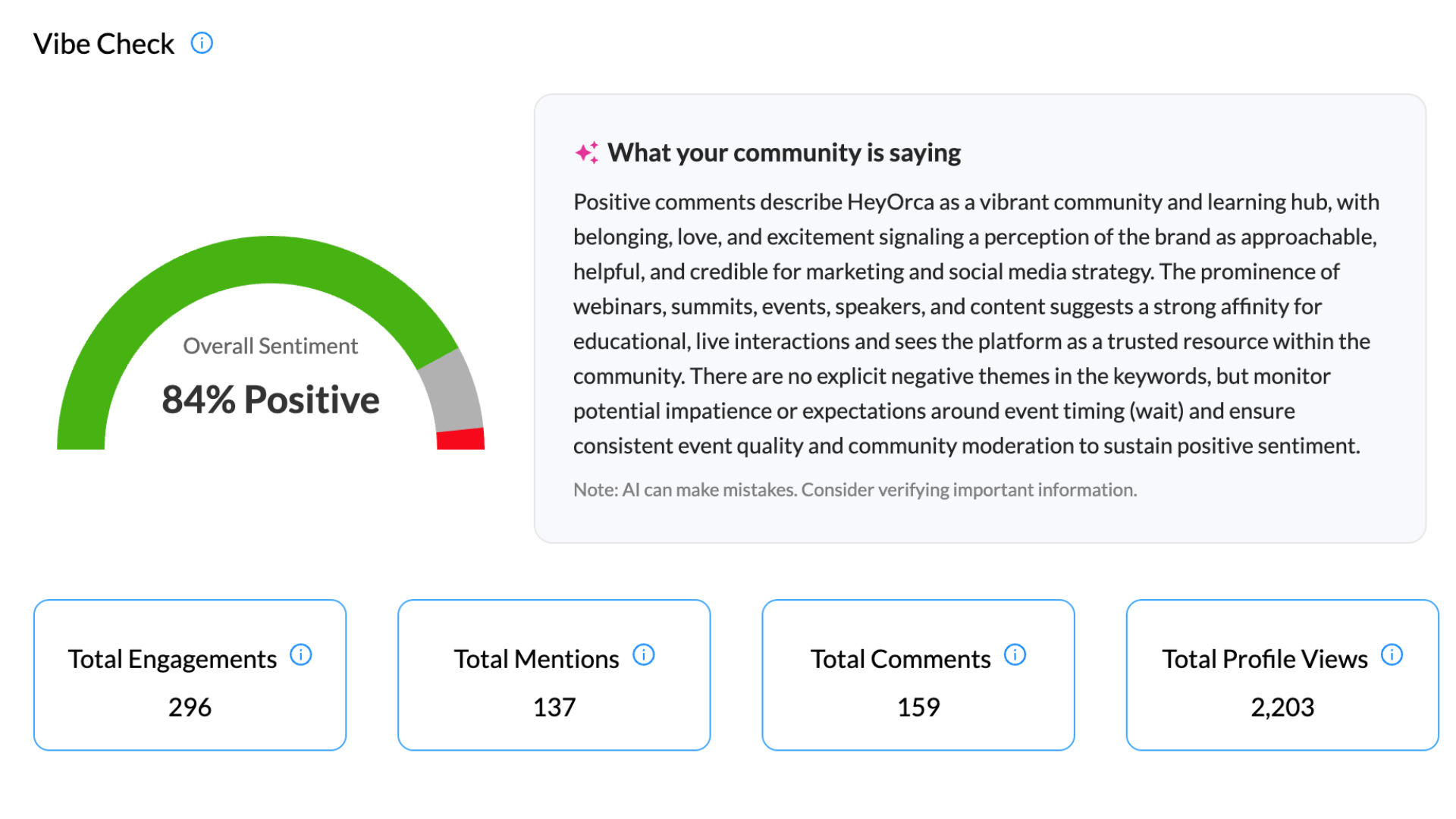
Traditional marketing metrics focus heavily on reach, clicks, and conversions – and while those metrics still matter, they don't tell the full story.
A successful community engagement strategy should measure participation and belonging alongside business outcomes.
Participation metrics
These metrics help you understand whether people are actively contributing.
Examples include:
- Comments and discussions
- Newsletter replies
- Community posts
- Event attendance
- Poll participation
- User-generated content
Relationship metrics
These metrics help you understand whether people are returning and building connections.
Examples include:
- Returning participants
- Repeat contributors
- Community retention
- Active community members
- Member referrals
Advocacy metrics
One of the strongest indicators of community health is advocacy.
When people genuinely value your community, they begin promoting it on your behalf.
Examples include:
- Brand mentions
- Customer testimonials
- Community referrals
- Word-of-mouth recommendations
- User-generated content
Business metrics
Community-led marketing should support business goals as well.
Track metrics such as:
- Customer retention
- Customer lifetime value
- Referral revenue
- Product adoption
- Customer satisfaction
Remember: participation often happens before conversion. Someone may spend months engaging with your community before becoming a customer.
But that doesn't make the engagement less valuable. In many cases, it makes the eventual conversion more meaningful.
Build belonging before you build scale
The strongest community-led marketing strategies don’t start with bigger audiences. They start with stronger connections.
By creating a shared identity, building spaces for participation, and encouraging meaningful contribution, brands can turn audiences into communities that want to stick around.
Want to learn how to put community-led marketing into action? Download our free Community-Led Marketing eBook for practical strategies, examples, and ideas to help you build a community people want to be part of.
Still paying per seat for your social media tool? With HeyOrca, you get unlimited users – so your whole team (and clients!!) can collaborate without the extra cost. Plan, approve, and schedule your next post now.
Every member of your team deserves a seat at the table. That's why every HeyOrca plan comes with unlimited users. Choose the social media scheduler that helps you create, collaborate, and build community – without worrying about extra fees. Start your free trial.
Build stronger social media communities. HeyOrca brings your whole team together – with unlimited users!! – to plan, approve, and schedule content in one place. See it come together in minutes.
Looking for a social media tool built for teams and agencies? Plan, approve, and schedule your next post in minutes with HeyOrca – no credit card required.
.png)